

The Ingredient Files
Panthenol, and what pro-vitamin B5 actually does.
Panthenol never leads a product page and it never needs to. It is a humectant, an emollient and one of the reasons a formula feels comfortable rather than merely wet. Here is what it is and where it earns its place.
1 to 5%
Typical use level of panthenol in leave on skincare
205
Molecular weight in daltons, small enough to move readily into the upper layers
1940s
The decade dexpanthenol entered topical use, which is a long record for a cosmetic ingredient
The alcohol form of vitamin B5.
Panthenol is the alcohol analogue of pantothenic acid, which is vitamin B5. On an ingredient list it appears as panthenol, pro-vitamin B5 or dexpanthenol. All three describe the same thing, and the version used in skincare is the D isomer, which is the one that is biologically active.
Applied to skin it is absorbed readily and converted to pantothenic acid, where it behaves as a humectant and an emollient at the same time (Ebner et al., 2002). That dual character is unusual. Most ingredients pull water or soften the surface. Panthenol does a bit of both, which is why it shows up so often in formulas that need to feel good as well as perform.
It is water soluble, it is stable, and it is tolerated at the levels used in cosmetics across essentially every skin type. Nothing about it is dramatic. That is the point of it.

Hydration, water loss and comfort.
Published work has examined how panthenol based formulations affect skin hydration and transepidermal water loss, the measure of how much water crosses out through the surface (Camargo et al., 2011). Other work has looked at how a dexpanthenol formulation behaves on skin whose barrier is under strain, and at the look of redness on skin that has been irritated (Gehring, 2004).
The wider literature on barrier function gives the context. Water loss across the surface is the mechanism behind most of what people describe as dry skin, and holding that water is what a humectant is for (Proksch et al., 2008). Long term use of a moisturiser containing ingredients of this kind has been examined for its effect on hydration and on how skin responds to irritants over months rather than days (Held et al., 1999).
What this adds up to is modest and reliable. Panthenol makes skin look and feel more comfortable, and it holds that comfort in place while other ingredients do the work that gets the headlines.

It fixes how a formula feels.
Panthenol is non comedogenic and it plays well with almost everything, which is the first reason it is everywhere. It sits alongside niacinamide, hyaluronic acid, peptides and ceramides without competing with any of them.
The second reason is sensory, and it is the one formulators will admit to privately. Panthenol gives slip. It lets a cream spread thin and finish clean instead of sitting on the surface as a film. A body balm with the right level of it wears satin soft. The same balm without it reads heavier at the same richness.
The third reason is that it makes demanding routines liveable. When skin feels tight after cleansing, or reactive after a strong active, the formula that settles it is usually one built on humectants and emollients rather than one built on another active. Panthenol is often the ingredient doing that quietly.

Not every ingredient needs to announce itself.
Four ways to make skin feel settled.
Comfort ingredients get lumped together on ingredient lists and they are not interchangeable. This is roughly how the common four differ in use.
| Ingredient | What it does | How it feels |
|---|---|---|
| Panthenol | Holds water and softens the surface at the same time | Silky, gives slip, no weight |
| Glycerin | Steady hydration, less affected by humidity in the air | Can feel tacky at higher levels |
| Hyaluronic acid | Binds a large volume of water near the surface | Light, needs something sealed over it |
| Allantoin | Supports a smooth surface and a calm look | Neutral, almost undetectable |
In a well built formula you will usually find two or three of these together. Panthenol is the one that most changes how the finished product wears on skin, which is why we use it where finish matters most.
Two formulas, both about finish.
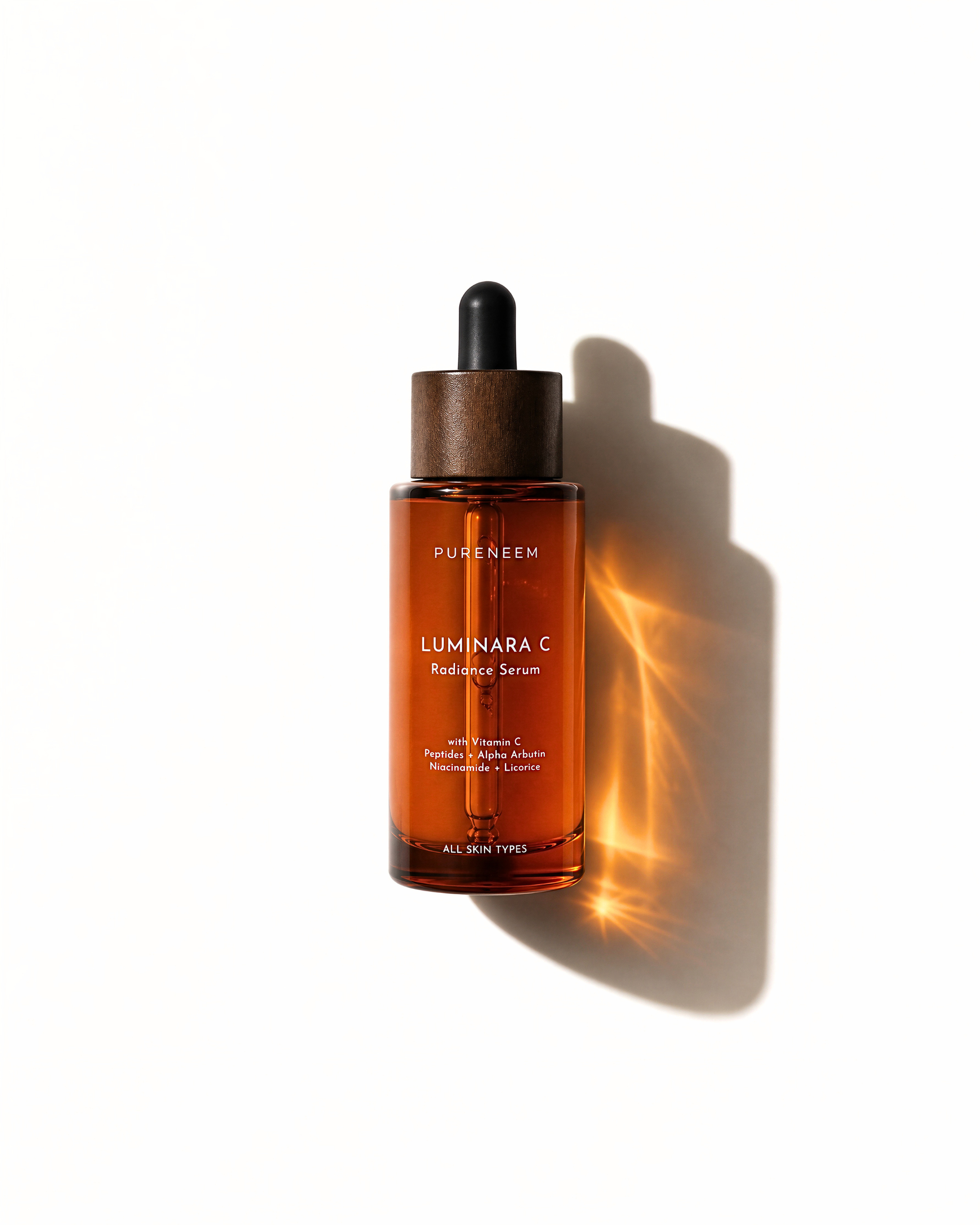
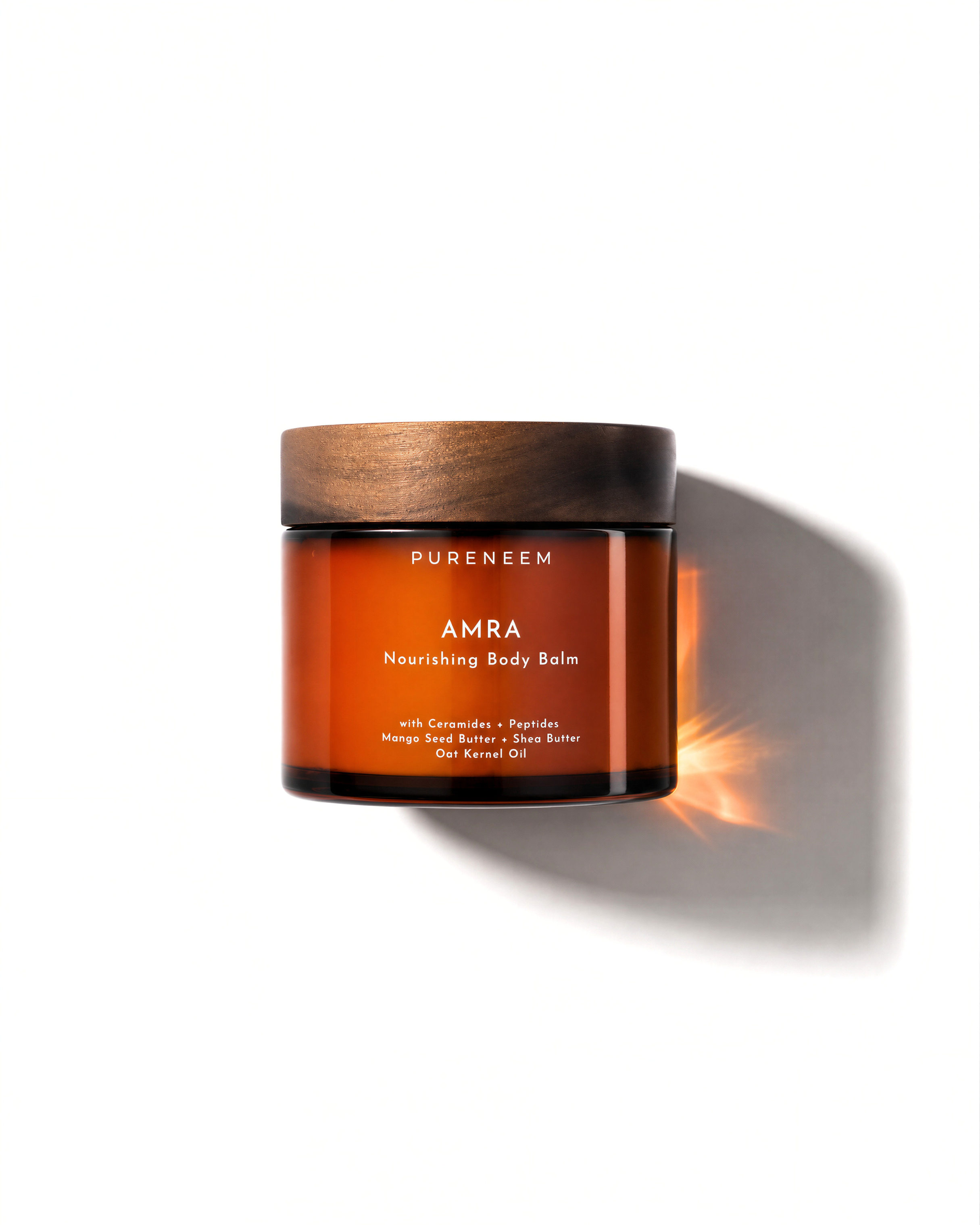
Panthenol is in the two places where comfort decides whether a product gets used. The balm you put on at night, and the serum you put on before everything else.
Body balms fail on finish more than on richness. Panthenol is a large part of why this one spreads thin, absorbs properly and leaves skin satin soft rather than coated.
A serum built around tone needs a counterweight or it reads dry by mid morning. Panthenol is that counterweight here, keeping the formula comfortable under moisturiser and sunscreen.
Where this matters most
Retinol is the clearest case. The dryness and flaking that make people give up in the first fortnight are a barrier under load, and the answer is almost never a gentler retinol. It is a better supporting routine around it.
Our guide to choosing a retinol cream and building tolerance sets out the four week ramp, and why humectants and emollients on the nights in between make the difference between sticking with it and shelving it.
Common questions
Panthenol, answered plainly.
What does panthenol do for your skin?
It holds water in the upper layers and softens the surface, so skin looks plumper and feels more comfortable. It is a hydration and comfort ingredient rather than a corrective one, and it is used at low levels in a very wide range of products.
Is panthenol good for sensitive skin?
It is one of the better tolerated ingredients in cosmetics and is widely used in formulas aimed at skin that reacts easily. As always, the rest of the formula matters as much as any single ingredient in it.
Panthenol or hyaluronic acid, which is better?
Neither replaces the other. Hyaluronic acid binds far more water and works fast near the surface. Panthenol holds less but also softens and gives a formula its slip. Most good products use both.
Can you use panthenol every day?
Yes, morning and night. It does not exfoliate, it does not increase sun sensitivity and there is no reason to cycle it. It is the sort of ingredient you stop noticing and would miss if it left.
Does panthenol clog pores?
Panthenol itself is non comedogenic and water soluble. If a product containing it feels heavy, the richer oils and butters in the base are the more likely explanation, so judge the texture of the finished product rather than the one line on the list.
References
- Camargo, F. B., Gaspar, L. R., and Maia Campos, P. M. B. G. (2011). Skin moisturizing effects of panthenol-based formulations. Journal of Cosmetic Science, 62(4), 361 to 370.
- Ebner, F., Heller, A., Rippke, F., and Tausch, I. (2002). Topical use of dexpanthenol in skin disorders. American Journal of Clinical Dermatology, 3(6), 427 to 433.
- Gehring, W. (2004). Efficacy of a dexpanthenol containing formulation on barrier impaired skin: a randomised, placebo controlled study. Journal of Dermatological Treatment, 15(3), 173 to 176.
- Held, E., Sveinsdottir, S., and Agner, T. (1999). Effect of long term use of moisturizer on skin hydration, barrier function and susceptibility to irritants. Acta Dermato-Venereologica, 79(1), 49 to 51.
- Proksch, E., Brandner, J. M., and Jensen, J. M. (2008). The skin: an indispensable barrier. Experimental Dermatology, 17(12), 1063 to 1072.
Pro-B5 Powered Formulations