

The Ingredient Files
Shea butter, and why body skin needs it more.
Shea is the most familiar butter in skincare and the least understood. What makes it good is not the richness. It is the unusual fraction that is not fat at all, and the balance of two fatty acids that decides how it wears.
4 to 11%
The unsaponifiable fraction of shea butter, unusually high for a plant butter
40 to 60%
Oleic acid share, the part that makes it spread and soften on contact
20 to 50%
Stearic acid share, the part that gives it structure in the jar
Two fatty acids in argument.
Shea butter is pressed from the nut of Vitellaria paradoxa, a tree that grows across the savannah belt of West Africa. Most of what it contains is oleic and stearic acid, and the ratio between those two is what you feel when you use it.
Oleic is soft and spreads. Stearic is firm and holds shape. A batch high in oleic is almost buttery at room temperature. A batch high in stearic sets hard and needs warming in the palm. Both are shea, and the difference comes down to where the nut grew (Honfo et al., 2014).
Then there is the part that separates it from every other butter on the shelf. Between four and eleven per cent of shea is unsaponifiable, meaning it is not fat at all. That fraction carries triterpenes, phytosterols and tocopherols, and it is why shea behaves more interestingly than its fatty acid profile alone would suggest.

Cushion, then seal.
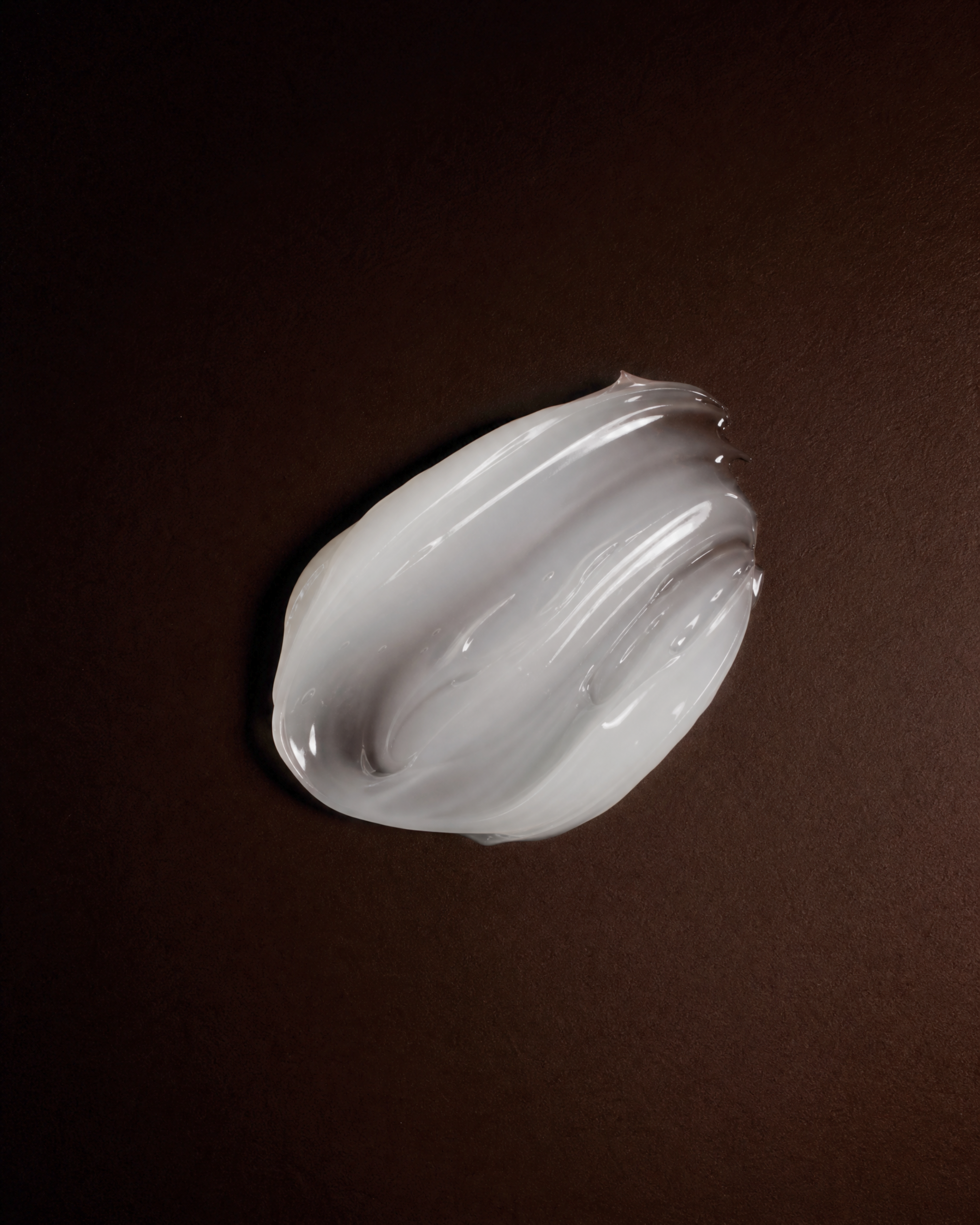
Shea is an emollient first and an occlusive second. The emollient part is immediate. It fills the gaps between loose surface cells, so rough skin feels smooth within seconds of application, before anything else has had a chance to happen.
The occlusive part is slower and more useful. A film of shea slows how quickly water leaves the skin, which is the mechanism behind almost every good body product. Work on vegetable fats in dermatology has examined how shea behaves against that measure alongside other emollients (Schliemann-Willers et al., 2005).
What it is not doing is feeding the skin from within. That framing was on this page before and it is not accurate. Shea sits at the surface, softens what is there and holds water in. That is an unglamorous description of something that works extremely well.

Below the neck, mostly.
Body skin is drier than facial skin, gets stripped more often by hot showers and hard water, and receives a fraction of the attention. It is the natural home for a butter this rich.
On the face shea can still work, but only at a low level and in a formula built to carry it. Undiluted, it is heavy enough to sit on the surface and interfere with anything you layer over it. Lighter lipids such as jojoba oil suit facial skin better for exactly that reason.
Where shea genuinely excels is next to things that do the other half of the job. Alongside ceramides it becomes a barrier formula rather than just a rich one, and alongside coconut oil it loses the waxy drag it can have on its own.

Body skin is face skin that nobody looks after.
Four butters, four finishes.
Butters are chosen for how they set and how they wear, not for how nourishing they sound. This is the practical difference between them.
| Butter | How it wears | Best in |
|---|---|---|
| Shea | Cushioned, slightly waxy alone, high unsaponifiables | Body balms, richer night formulas |
| Mango | Firmer set, drier finish, lighter on the skin | Balms that need to feel less heavy |
| Cacao | Hard, very occlusive, melts at body temperature | Sealing the driest areas |
| Coconut oil | Soft, fast melting, strongly occlusive | Softening a formula that would otherwise set firm |
A balm built on shea alone tends to feel like a balm. Blended with mango and cacao, it stops reading as one thing and starts behaving like a body cream with the staying power of a balm, which is the finish we are after.
Rich where it should be, quiet where it should not.
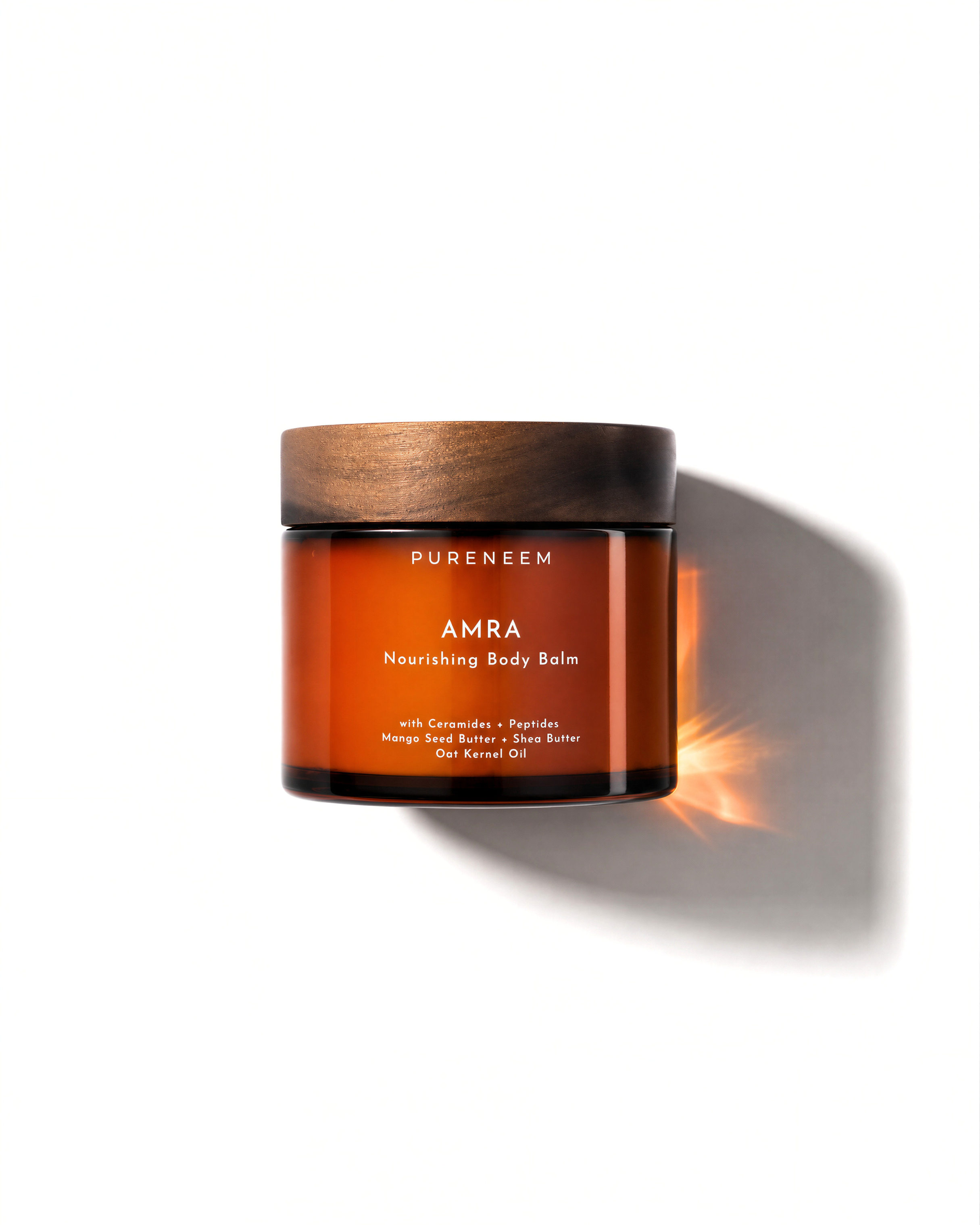
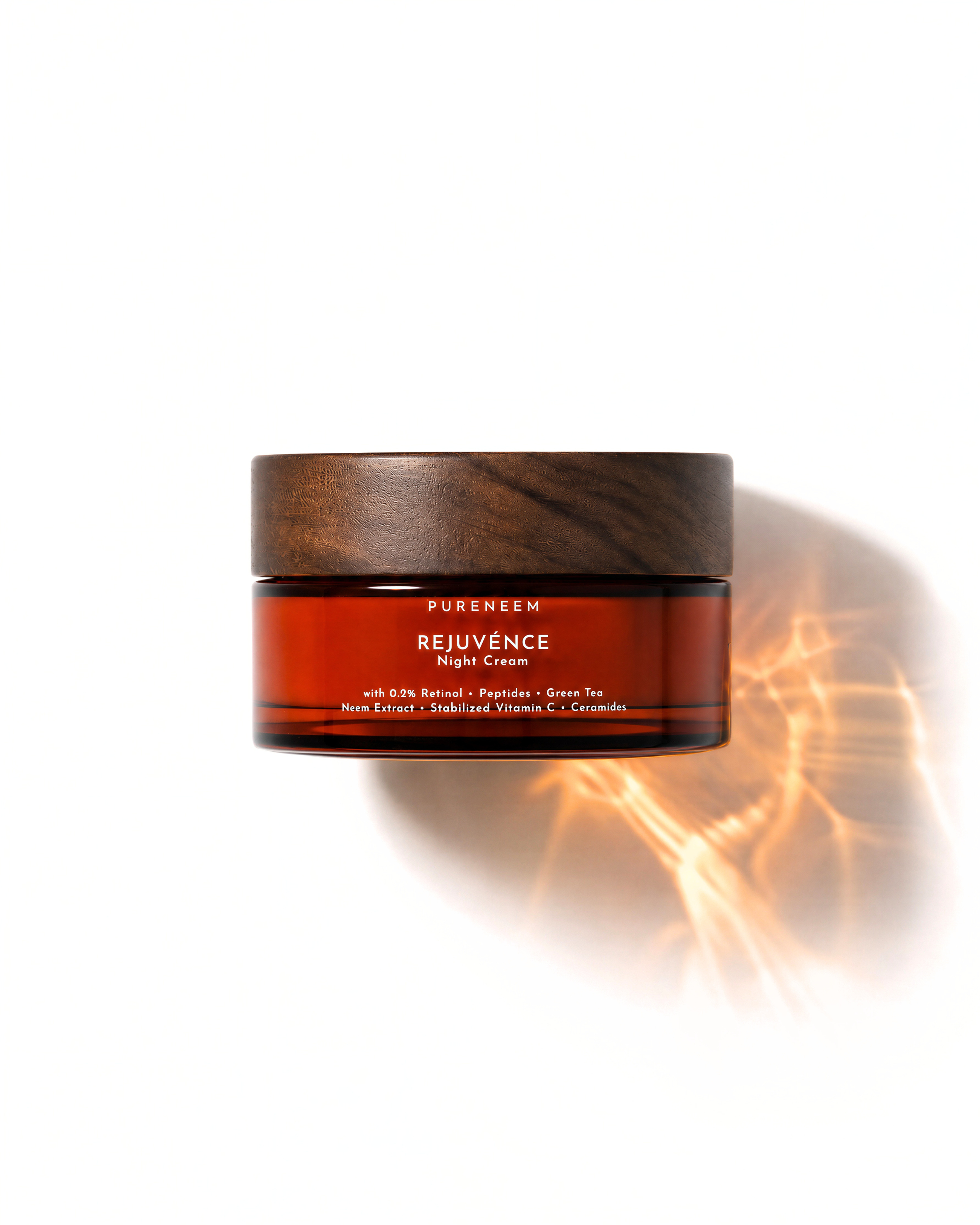
Shea sits in four PureNeem formulas at very different levels. These two show what changes when you move the dial.
Shea is the backbone of this one. Mango and cacao butter set the structure, coconut oil keeps it from turning waxy, and the ceramides mean it supports the barrier rather than only coating it. Face grade thinking applied to a body product.
Here shea is present at a fraction of the level, and the job is entirely different. It gives a light facial cream enough cushion to stay comfortable through the day without ever reading as rich. You should not be able to tell it is in there.
When rich is the wrong answer
Skin that looks flat and dehydrated does not always want more oil. Often there is not enough water in the upper layers to hold onto, and adding a butter over the top simply seals in the shortage.
The order matters. Water first, lipid second. Our guide to the best snail mucin skincare in Australia covers what to layer underneath a richer formula, and how to tell dehydration apart from dryness.
Common questions
Shea butter, answered plainly.
Is shea butter good for dry skin?
It is one of the better options for dry body skin. It softens the surface immediately and slows water loss afterwards. Apply it while skin is still slightly damp, because it holds water in rather than supplying any.
Does shea butter clog pores?
It sits low to moderate on the comedogenicity scale, well below coconut oil. On body skin it is rarely an issue. On the face it depends far more on how much is in the formula than on the butter itself.
What is the difference between refined and unrefined shea butter?
Unrefined shea keeps its nutty scent, its colour and most of the unsaponifiable fraction. Refined shea is paler and neutral in smell, having lost some of that fraction in processing. We use unrefined, and formulate around the scent.
Can you use shea butter on your face?
Yes, at the right level. Neat shea is heavy enough to sit on the surface and cause anything layered over it to pill. In a well built facial cream it adds cushion without weight, which is how we use it.
Is shea butter better than mango butter?
Neither is better, they finish differently. Shea is more cushioned and slightly waxy on its own. Mango sets firmer and dries down lighter. Most good balms use both, because the blend is more wearable than either alone.
References
- Schliemann-Willers, S., Goorha, S., Wigger-Alberti, W., and Elsner, P. (2005). Natural vegetable fats in dermatology: a clinical and instrumental study. Skin Pharmacology and Physiology, 18(2), 89 to 94.
- Honfo, F. G., Akissoe, N., Linnemann, A. R., Soumanou, M., and van Boekel, M. A. J. S. (2014). Nutritional composition of shea products and chemical properties of shea butter: a review. Critical Reviews in Food Science and Nutrition, 54(5), 673 to 686.
- Vermaak, I., Kamatou, G. P. P., Komane-Mofokeng, B., Viljoen, A. M., and Beckett, K. (2011). African seed oils of commercial importance, cosmetic applications. South African Journal of Botany, 77(4), 920 to 933.
- Maranz, S., and Wiesman, Z. (2003). Evidence for indigenous selection and distribution of the shea tree and its potential significance. Agroforestry Systems, 58(1), 45 to 56.
Deeply Nourishing: Shea Butter Rituals