


Snow Mushroom vs Hyaluronic Acid: Which Hydrator Actually Wins?
For two decades hyaluronic acid was the gold standard for hydration. Then Tremella fuciformis arrived from Korean dermatology — smaller, gentler, and in many studies more effective. The honest comparison.
For two decades, hyaluronic acid has dominated skincare's hydration category — name-checked on every serum label, foundational in nearly every routine, and validated by enough clinical research to fill a dermatology journal. It earned its place. But the modern hydration story has a new chapter, and it belongs to a botanical that's been used in traditional Chinese medicine for centuries: Tremella fuciformis, the snow mushroom.
What started as a K-beauty curiosity has become a genuine reckoning. Snow mushroom doesn't just rival hyaluronic acid — in several measurable ways, it surpasses it. Smaller particle size. Deeper penetration. Additional antioxidant activity. Better tolerance in sensitive skin. The studies are mounting, and the formulations are following.
This isn't a marketing claim — it's a comparison of how two hydrators actually behave at the molecular level. Where each wins. Where each loses. And why the smartest modern formulations use both.
The Hydration Decoded
Same goal. Different chemistry. Different behaviour in real skin.

A botanical polysaccharide from Tremella fuciformis — smaller, deeper, and gentler than the synthetic standard.
- Source Botanical. Edible fungus, traditional Chinese medicine.
- Molecule Size Smaller than hyaluronic acid — penetrates deeper layers.
- Water Holding Up to 500x its weight in water.
- Bonus Activity Antioxidant, anti-inflammatory, barrier-supporting.
- Skin Feel Silken, cushioning, never sticky.
A glycosaminoglycan that naturally occurs in skin — the proven, widely-formulated hydration standard.
- Source Synthetic / Bio-fermented. Naturally found in skin.
- Molecule Size Variable — large molecules stay on surface.
- Water Holding Up to 1,000x its weight in water (theoretical).
- Bonus Activity Hydration only — no antioxidant function.
- Skin Feel Can feel tacky at higher concentrations.
The Direct Comparison
The Sensitive-Skin Verdict
For reactive complexions, the difference between these two molecules is the difference between hydration that helps and hydration that triggers.
Snow mushroom polysaccharides hold up to 500 times their weight in water — without surface tackiness or barrier stress.
Tremella's nanoparticle size penetrates dermal layers hyaluronic acid cannot reach, hydrating from within rather than coating from outside.
Across published dermatological literature, snow mushroom shows an exceptionally clean safety profile — even in rosacea-prone and reactive complexions.
Hyaluronic acid is a remarkable molecule, but it has a quiet trade-off: in dry environments — including the low-humidity months across most of Australia — high-molecular-weight HA can actually pull moisture out of the skin rather than into it, contributing to the very dehydration it's meant to address. The phenomenon is well-documented in dermatological literature and explains why HA serums sometimes feel worse, not better, in winter or air-conditioned rooms.
Snow mushroom doesn't have this problem. Its smaller molecular structure delivers true intracellular hydration — water bound inside the skin's deeper layers, not theoretical moisture trapped on the surface. For sensitive, reactive, or climate-stressed skin, this is the meaningful difference between a hydrator that works with your skin and one that occasionally works against it.

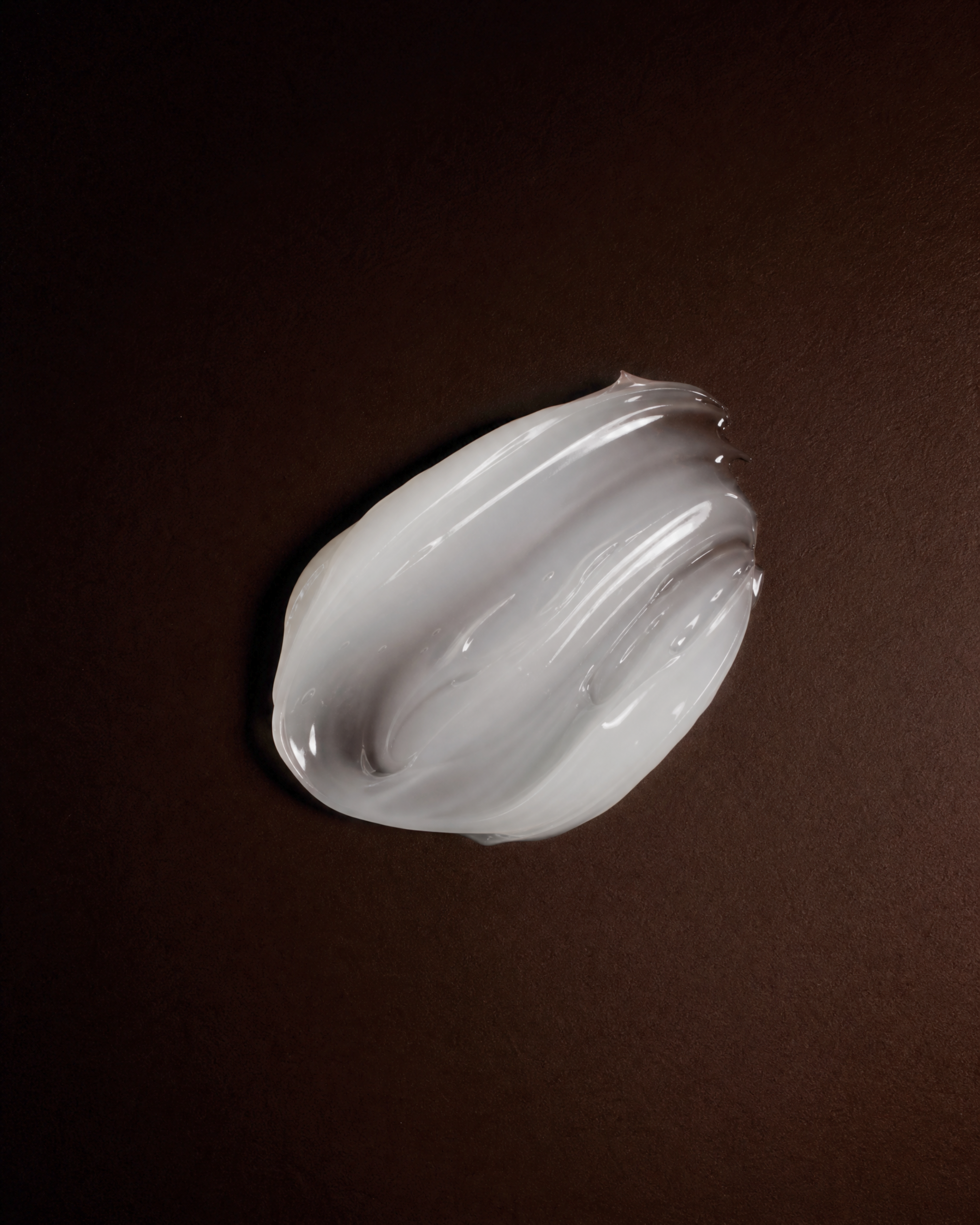
Mucina Silk Hydration Cream
The only PureNeem cream formulated with both snow mushroom and hyaluronic acid — each chosen for the specific layer of skin it serves.
The smartest formulations don't pick a side — they pair both hydrators for full-layer coverage. Tremella fuciformis reaches the deeper dermal layers where its smaller particle size delivers intracellular moisture. Hyaluronic acid sits on top, plumping the epidermal surface for that immediate dewy glow. Together they hydrate every layer your skin actually needs.
When to Choose Which
- Want immediate visible plumping — a fast, dewy surface effect.
- Live in a humid climate with consistent atmospheric moisture.
- Have resilient, non-reactive skin.
- Use HA as part of a layered routine with humectants and occlusives.
- Want a clinically familiar ingredient with extensive consumer research.
- Have sensitive, reactive, or rosacea-prone skin.
- Live in dry or variable climates like much of Australia.
- Want deep-layer hydration that lasts through the day.
- Prefer botanical actives with antioxidant bonus activity.
- Want the next-generation hydrator that K-beauty is moving toward.
The smartest answer isn't a binary — the best modern hydration formulations include both.
Read the Full Snow Mushroom Journal
A deeper dive into Tremella fuciformis — its history in traditional medicine, the science behind its polysaccharides, and why it's becoming the modern standard for sensitive-skin hydration.
Read the Snow Mushroom Journal →