

Formulation Notes
Which peptide sits in which formula, and why.
Most brands write peptides on a box and leave it there. There are hundreds of them and they are not interchangeable. This is our map: the four we use, named, with the product each one sits in and the reason it was chosen.
4
Named peptides across the range, not a generic complex
4
Formulas that carry peptides, out of seven products
2
Of the four appear in every peptide formula we make. The others are specific
Palmitoyl Tripeptide-1 and Palmitoyl Tetrapeptide-7.
These two are in every peptide formula we make. They are the best documented signal peptides in cosmetic use and they are almost always paired, because they were developed to be.
The palmitoyl part is a fatty acid tail attached to the peptide. That tail is the point. A bare peptide is water loving and does not associate well with a lipid rich surface. Attaching a fatty chain makes the molecule friendlier to skin lipids, which is a formulation decision rather than a marketing one.
Published work on this pair has examined the look of fine lines and surface smoothness over periods of eight to twelve weeks. We use them for the look of firmness and evenness, and we leave the claim there. If you want what the research actually examined, in detail, we wrote a full explainer on peptides.

Tetrapeptide-38, and why it is only in Rejuvence.
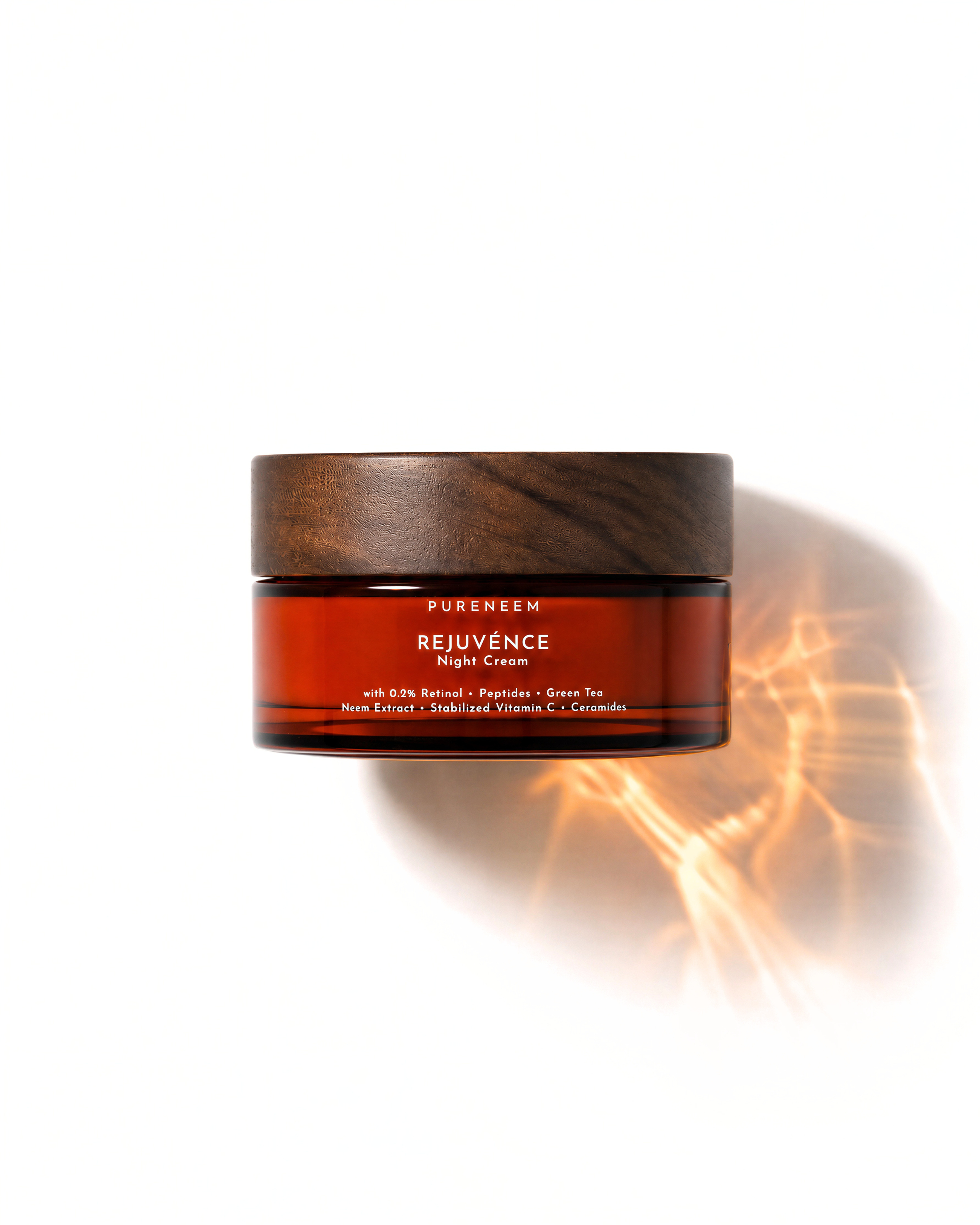
Tetrapeptide-38 sits in one formula and one only. It is the addition to the constant pair in Rejuvence Night Cream, and it is there because of what else is in that jar.
Rejuvence carries retinol. A night cream with retinol is asking a lot of the surface, which is why the same formula also carries ceramides and shea butter. Adding a third peptide to the pair is about depth in a formula that runs overnight, when nothing else is going on and there is no sunscreen, no makeup and no interruption.
We do not put it in a daytime product because we do not need to. Peptides pair happily with almost everything, which we cover alongside ceramides and niacinamide, but there is no reason to load the same actives into every step of a routine.

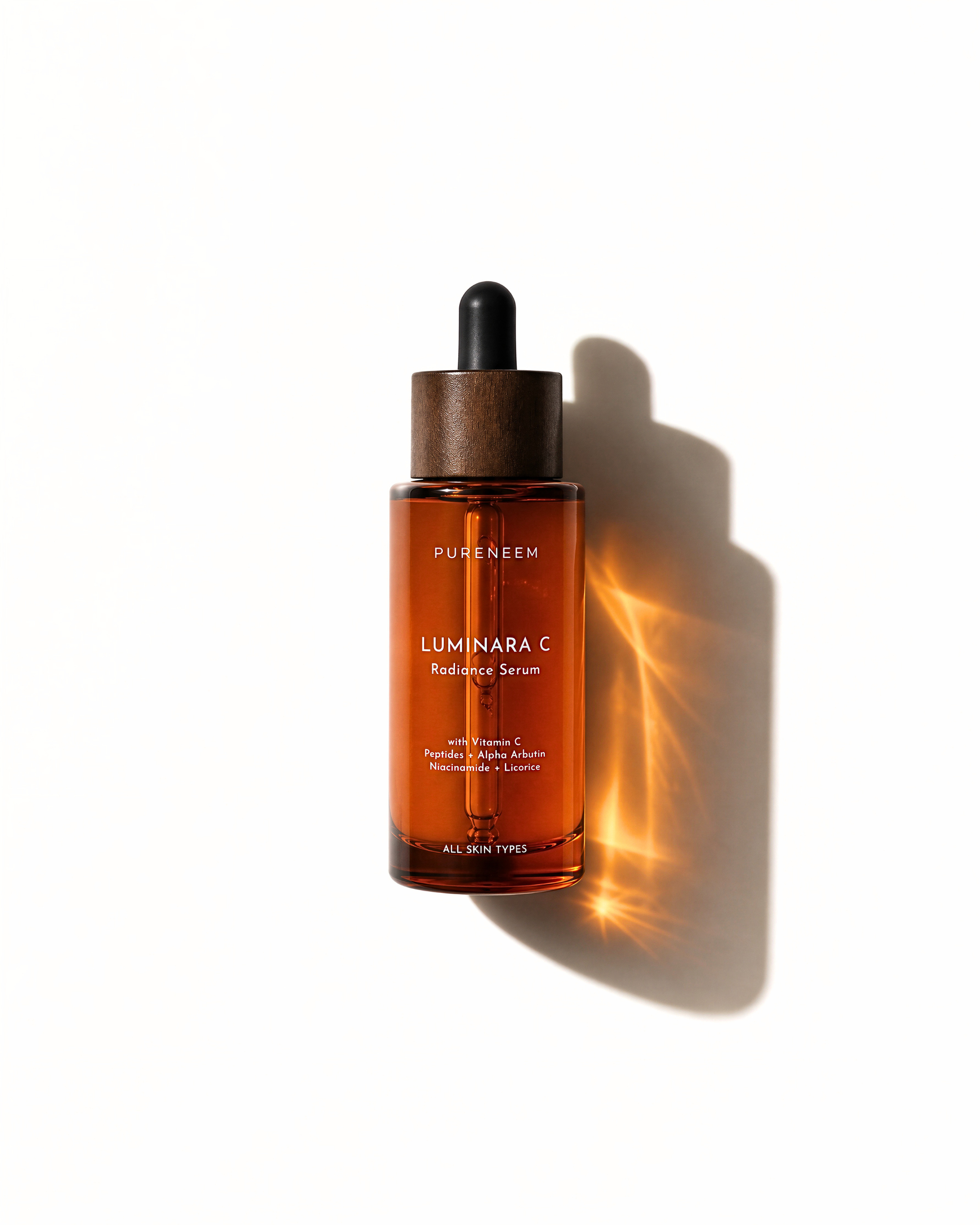
Tetrapeptide-30, and why it is only in Luminara C.
Tetrapeptide-30 is the fourth, and like Tetrapeptide-38 it appears in exactly one formula. It is in Luminara C Radiance Serum because that serum has a specific brief, which is the look of uneven tone.
It does not work alone there. It sits alongside ethyl ascorbic acid, alpha arbutin, licorice root and turmeric root extract, which is four other ingredients chosen for the same visual outcome. A peptide is a contributor in that stack, not the headline.
The honest framing is that tone takes time. Published work in this area runs over weeks, not days, and a serum is one input among several. Sunscreen is the other one, and it matters more than any of this.

Name the peptide, or do not claim it.
Four peptides, four formulas, on one page.
If you only read one thing here, read this table. It is the answer to which product carries what.
| Peptide | Where it sits | Why it is there |
|---|---|---|
| Palmitoyl Tripeptide-1 | Amra, Mucina, Rejuvence, Luminara C | The constant. Chosen for the look of firmness and smoothness |
| Palmitoyl Tetrapeptide-7 | Amra, Mucina, Rejuvence, Luminara C | Its partner. The two are almost always used as a pair |
| Tetrapeptide-38 | Rejuvence Night Cream only | Added depth in the one formula that runs overnight with retinol |
| Tetrapeptide-30 | Luminara C Radiance Serum only | Part of the stack built around the look of uneven tone |
Three of our seven products carry no peptides at all. Curcuma Glow Oil is an anhydrous facial oil, Neemra is a cleanser that rinses off, and Coco & Char is an exfoliant. Putting peptides into any of the three would be decoration. A peptide in a wash off product is money going down the drain, quite literally, and we would rather say so than sell it.
The two with a peptide of their own.
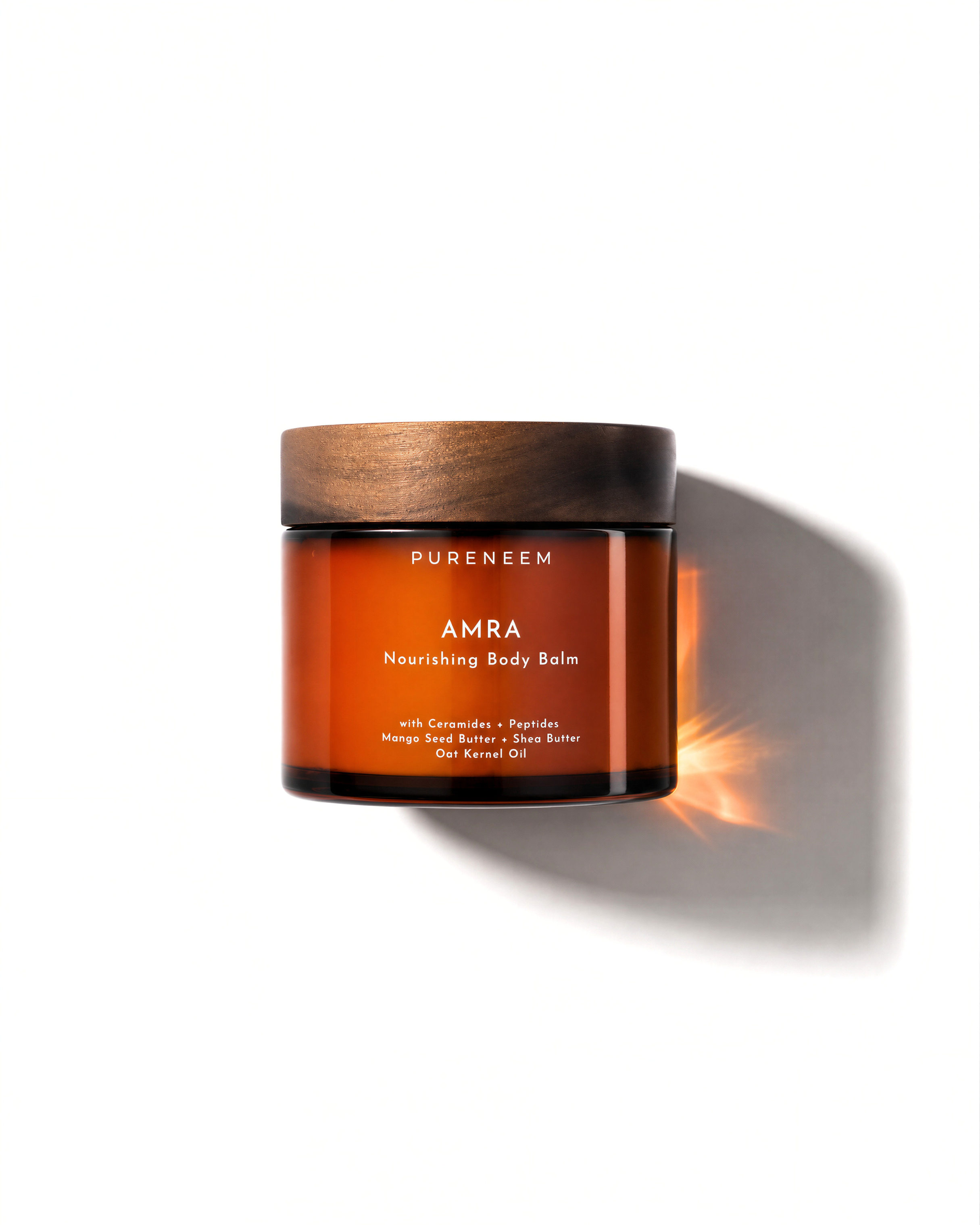
The Amra Nourishing Body Balm and the Mucina Silk Hydration Cream both carry the constant pair and nothing beyond it. These two carry something the others do not.
The constant pair plus Tetrapeptide-38. The ceramides and shea butter alongside them are the reason a retinol formula can be worn nightly without the surface protesting.
The constant pair plus Tetrapeptide-30, behind ethyl ascorbic acid and alpha arbutin. The peptides are the supporting layer here rather than the reason to buy it.
A practical note on peptides and retinol
People ask whether the two conflict. They do not. Retinol asks a lot of the surface and a peptide and ceramide formula is a sensible thing to have in the same routine, which is why Rejuvence carries both in one step.
Our guide to building tolerance to retinol sets out the four week ramp and why the supporting ingredients in the formula matter as much as the percentage on the box.
Common questions
The peptide map, answered plainly.
Which PureNeem products contain peptides?
Four. Amra Nourishing Body Balm, Mucina Silk Hydration Cream, Rejuvence Night Cream and Luminara C Radiance Serum. Curcuma, Neemra and Coco & Char do not.
What is the difference between Tetrapeptide-30 and Tetrapeptide-38?
Different molecules with different briefs, despite the similar names. Tetrapeptide-30 sits in Luminara C as part of a stack built around the look of even tone. Tetrapeptide-38 sits in Rejuvence and adds depth to the overnight formula. Neither appears in the other product.
Why is the same peptide pair in four different products?
Because it is well documented and it behaves predictably across very different textures, from a body balm to a watery serum. The pair is the base. What gets added to it is what makes each formula specific.
What does palmitoyl mean on an ingredient list?
It means a fatty acid chain has been attached to the peptide. That makes the molecule more compatible with the lipid rich surface of skin, which is the reason the modification exists.
How long do peptides take to show anything?
Published work in this area typically runs eight to twelve weeks. A fair personal assessment is a full season rather than a fortnight, and consistency matters more than the number on the label.
References
- Lupo, M. P., and Cole, A. L. (2007). Cosmeceutical peptides. Dermatologic Therapy, 20(5), 343 to 349.
- Schagen, S. K. (2017). Topical peptide treatments with effective anti-aging results. Cosmetics, 4(2), 16.
- Gorouhi, F., and Maibach, H. I. (2009). Role of topical peptides in preventing or treating aged skin. International Journal of Cosmetic Science, 31(5), 327 to 345.
- Errante, F., Ledwon, P., Latajka, R., Rovero, P., and Papini, A. M. (2020). Cosmeceutical peptides in the framework of sustainable wellness economy. Frontiers in Chemistry, 8, 572923.
- Reddy, B. Y., Jow, T., and Hantash, B. M. (2012). Bioactive oligopeptides in dermatology. Experimental Dermatology, 21(8), 563 to 568.
PureNeem Products with Peptides