

Our Origin
How a tradition becomes a formula.
Ayurveda meets modern science is an easy sentence to write and a difficult one to execute. This is the part we are usually asked about. What happens between a botanical with a long history and a finished formula with a clean finish, and who decides what survives the journey.
4
Named peptide sequences used across the PureNeem range
5
Checks a raw material passes before it reaches a finished formula
1
Ingredient list, which is where every claim we make has to be checkable
A shortlist five thousand years in the making.
PureNeem began with a practical observation rather than a spiritual one. A handful of botanicals have been used continuously for a very long time, across a very large number of people, for skin specifically. That is not proof of anything. It is an unusually well filtered shortlist.
Neem sits at the front of ours, which is where the name comes from. In Ayurvedic practice it has been used for centuries in cleansing preparations, and it has one of the longer published research records of any traditional botanical (Biswas et al., 2002). That combination, long use plus modern literature, is the reason it earns a place rather than the reason it is romanticised.
What we do not do is mistake the tradition for evidence. It tells us where to look. Everything after that is ordinary formulation work, and the standard we hold it to is set out in intelligent beauty.

Extraction is the part nobody photographs.
A leaf is not an ingredient. Between the two sits a set of decisions that determine almost everything about whether the finished product does what the label suggests.
Which part of the plant. Which solvent, since water and oil pull out entirely different compounds from the same material. Cold pressed or heat assisted, because heat is efficient and unkind to delicate constituents. What the extract is standardised to, and at what percentage of that marker compound. Then the unglamorous checks, for heavy metals, microbial load and batch to batch consistency.
None of this appears on a carton, and it is where most of the difference between two products listing the same botanical actually lives. Our note on neem extract goes through one material in that level of detail.

Botanicals and actives are not rivals.
The common mistake is to think of the botanical and the modern active as two philosophies sharing a jar. In a good formula they are two mechanisms covering different parts of one job.
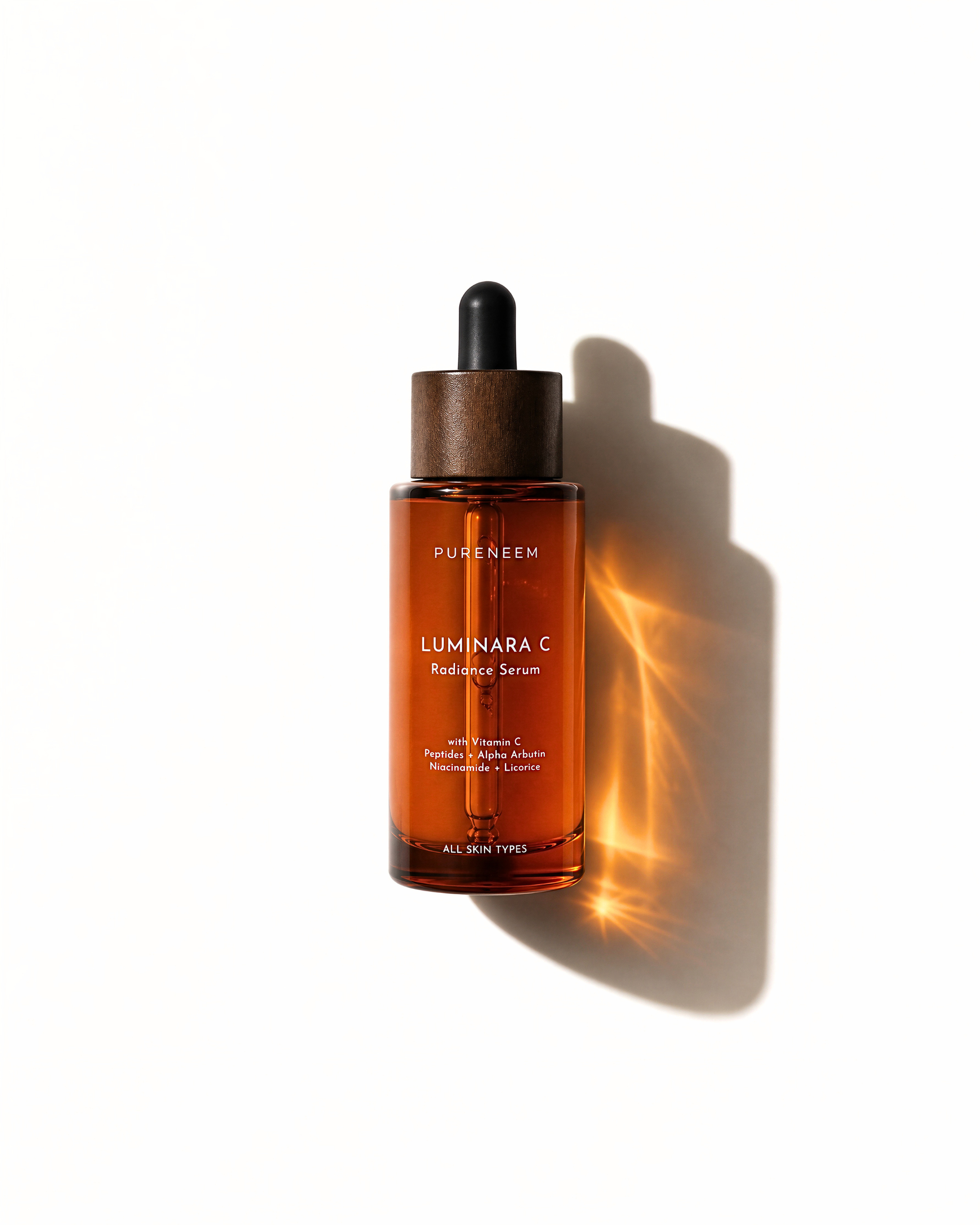
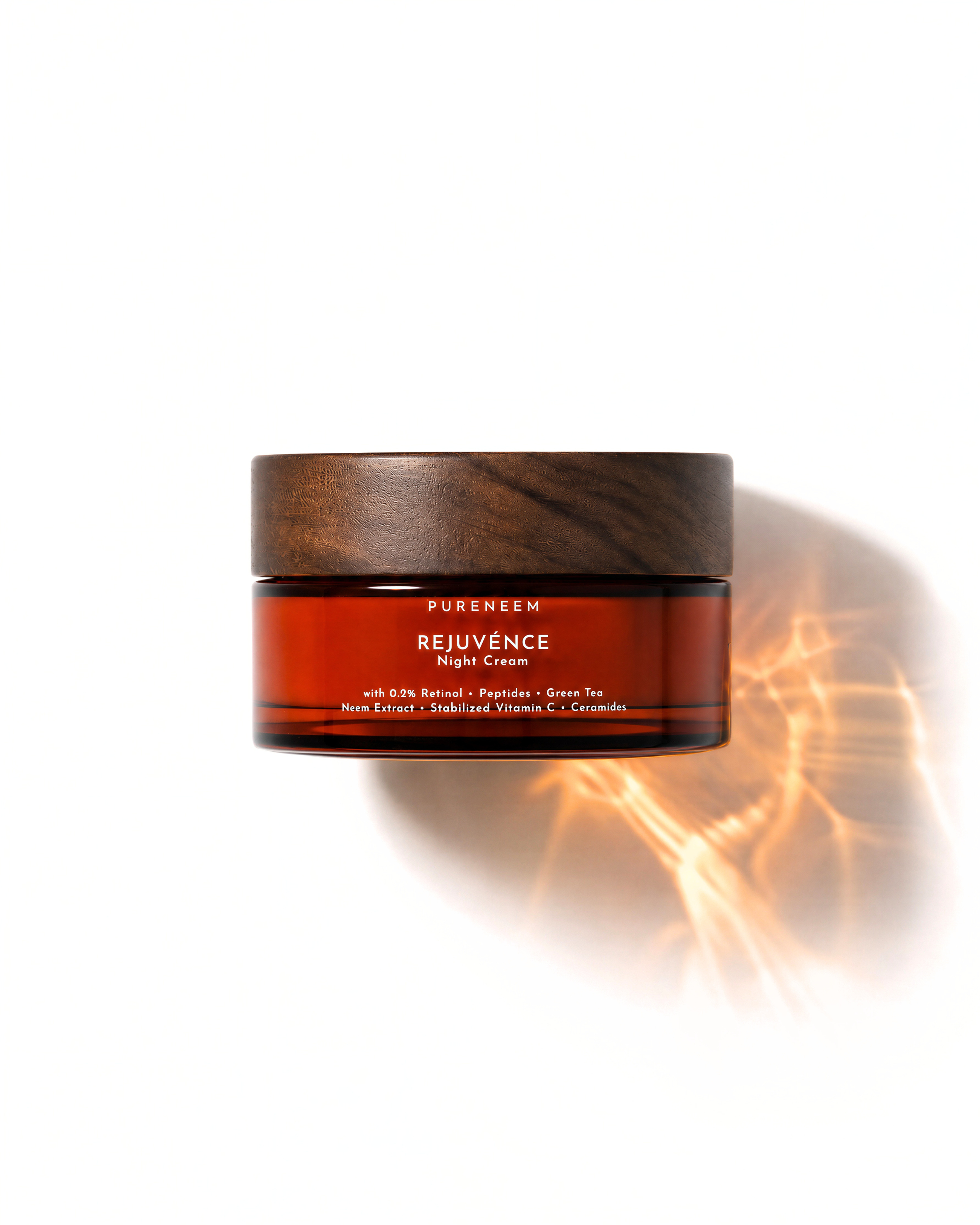
A stabilised vitamin C derivative and licorice both sit in our radiance serum. They arrive at a similar visible outcome by unrelated routes, which is exactly why they pair well rather than duplicate each other. Retinol and ceramides sit in the night cream for the same reason. One asks something of the skin, the other supports it while the asking happens.
Peptides are the clearest example of how far the modern half has moved. We use four named sequences across the range, chosen for what each has been studied for rather than for the word peptide on a box. Where those sit in the wider market is covered in Ayurveda today.

Tradition chooses the ingredient. The laboratory decides whether it stays.
What a raw material passes through.
In order, and with no exceptions made for a good story. A material that fails at step two never reaches a sample, however well it would have read on the pack.
- Identity. The correct species and the correct plant part, confirmed on documentation rather than assumed from the supplier's product name.
- Standardisation. A stated concentration of the marker compound, so that two batches behave the same way in the same formula.
- Purity. Heavy metals, pesticide residue and microbial load within specification, which is where a surprising number of botanical materials fail.
- Stability. Does it survive the pH, the emulsion and the light exposure of the product it is going into, or does it only perform on paper.
- Sensory outcome. Colour, scent and slip in the finished texture, because a botanical that stains or drags is a botanical that gets abandoned.
The container is the last of these decisions rather than the first, and we chose it on the same basis. The reasoning behind the glass and the walnut, including the claims we deliberately do not make about it, is on our packaging page.
The method, in two products.
One formula led by the tradition, one led by a modern active. Both built the same way.
The botanical is the brief here. The modern half is there to control the finish, so the cleanse reads as clarifying rather than stripping and skin feels comfortable a few minutes later rather than tight.
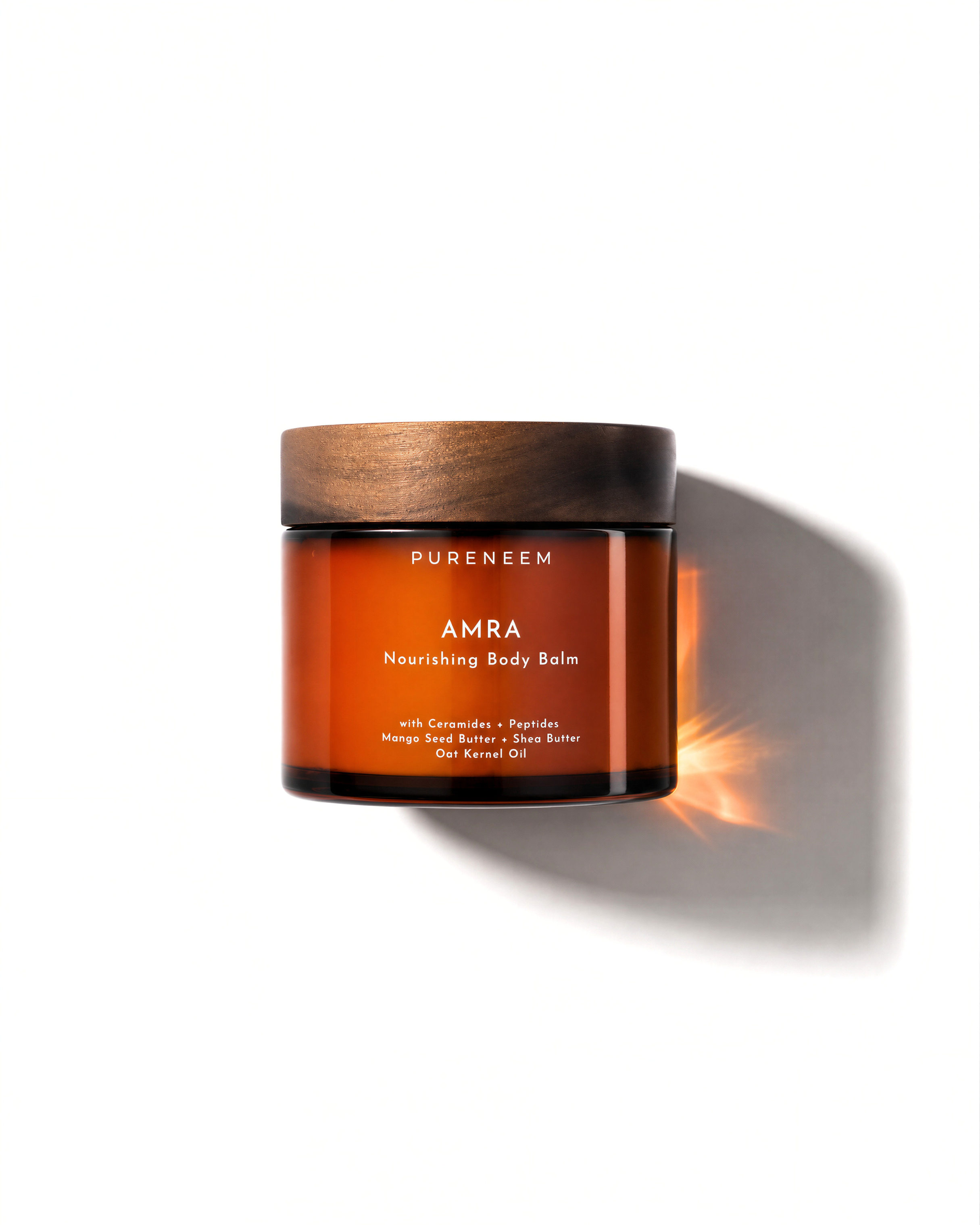
Here the modern active sets the brief and the botanicals support it. Neem, licorice and green tea sit alongside ceramides and shea, which is what makes the first month on retinol considerably less eventful.
Where the method is easiest to see
If you want to watch this approach applied to a single ingredient, vitamin C is the best place to look. The derivative matters more than the percentage, stability decides whether any of it survives the bottle, and the supporting botanicals are doing genuine work rather than decorating the label.
Our guide to choosing a vitamin C serum in Australia sets out the derivatives, what to look for, and what to ignore.
Common questions
The PureNeem method, answered plainly.
What does Ayurveda meets modern science actually mean?
It means the tradition decides which botanicals we look at, and standard formulation practice decides whether they make it into a product. Extraction, standardisation, stability and texture testing all apply equally to a traditional ingredient and a laboratory one.
Is PureNeem only neem products?
No. Neem is the signature botanical and appears in four of the seven formulas. The others are built around whatever the brief needs, which has included snail mucin, snow mushroom, peptides, ceramides and stabilised vitamin C.
Are the botanicals standardised extracts?
Where a standardised form exists, yes. That is the point of the second check. A plant name on a list tells you very little about how much of the studied compound is present, which is why we work from the marker rather than the name.
Where are PureNeem products made?
The brand is Melbourne based and operates under Pure Prana Pty Ltd. Formulation and specification are set in house, and raw materials are sourced against the checks described above rather than by lowest cost.
Do you use synthetic ingredients alongside the botanicals?
Yes, and we are direct about it. Peptides, niacinamide, ethyl ascorbic acid and retinol all sit in the range. A botanical is not automatically the better answer, and pretending otherwise would make the formulas worse.
References
- Biswas, K., Chattopadhyay, I., Banerjee, R. K., and Bandyopadhyay, U. (2002). Biological activities and medicinal properties of neem (Azadirachta indica). Current Science, 82(11), 1336 to 1345.
- Lintner, K., and Peschard, O. (2000). Biologically active peptides: from a laboratory bench curiosity to a functional skin care product. International Journal of Cosmetic Science, 22(3), 207 to 218.
- Reuter, J., Merfort, I., and Schempp, C. M. (2010). Botanicals in dermatology: an evidence based review. American Journal of Clinical Dermatology, 11(4), 247 to 267.
- Stamford, N. P. J. (2012). Stability, transdermal penetration and cutaneous effects of ascorbic acid and its derivatives. Journal of Cosmetic Dermatology, 11(4), 310 to 317.
The Synergy of Ayurveda & Science