

The Ingredient Files
Neem, and what it is actually doing in the formula.
It is the botanical we are named after, which is exactly why we are careful about how we talk about it. Neem is a cosmetic ingredient in our range. Here is the honest version of what it contributes, where it sits, and the four products it is deliberately not in.
140
Compounds isolated from the different parts of the neem tree and catalogued in the literature
4000
Years neem appears in the Indian written and household record, in daily domestic use
4
PureNeem formulas that carry neem, out of seven in the range
A domestic tree, not a discovery.
Azadirachta indica grows across the Indian subcontinent as an ordinary street tree. It is not rare, it is not exotic, and it was never a secret. In most of India it is the tree in the courtyard, and its leaves have been ground into pastes, steeped into washes and folded into oils for as long as anyone has bothered to write things down.
That is the part of the story worth keeping. Neem earned its place through centuries of plain domestic use, not through a laboratory press release. It is a botanical with a very long record of people using it on their skin and coming back to it.
Chemically it is dense. More than a hundred and forty compounds have been isolated from the tree, and the names you will see cited on an ingredient deck are nimbin, nimbidin, azadirachtin and quercetin (Biswas et al., 2002). What we use is a standardised, deodorised leaf extract, dosed low and blended into a system designed around it.

Where we draw the line.
Neem has a large scientific literature and most of it belongs to pharmacology and agronomy rather than cosmetics. Published work has catalogued the constituents of neem leaf and examined their antioxidant behaviour in laboratory assays (Ghimeray et al., 2009), and review papers have mapped the plant's traditional uses across centuries (Kumar and Navaratnam, 2013).
We read that literature carefully and then we leave most of it on the shelf, because it is not about the thing we sell. A cosmetic formula is a cosmetic formula. What neem contributes here is the look and feel of clarified skin, a less congested looking surface, and a calm, comfortable finish once the product is off.
That is a smaller claim than the one you will read elsewhere. It is also the only one we are prepared to stand behind, and we would rather be the brand that says so than the brand that does not.

Assertive, so it needs company.
Neem is not a shy ingredient. Raw leaf extract is bitter, deeply green and carries a characteristic sharp smell that most people notice immediately. Left to its own devices in a formula it reads as austere, and skin can feel tight afterwards rather than comfortable.
So it is never on its own. In our cleanser it sits with aloe and glycerin so the wash clarifies without the squeak. Across the range it is paired with allantoin and licorice root for comfort, and with green tea and turmeric root where the formula is working on the look of tone.
The deodorised extract is the other half of the answer. Traditional neem preparations smell like traditional neem preparations, and there is a romance to that which does not survive contact with a modern bathroom shelf. A standardised extract keeps the character of the botanical and loses the part nobody wanted.

We are named after it. That is a reason to be careful, not loud.
Five things that are true about neem here.
Neem attracts more overstatement than any other botanical we work with. This is the list we hold ourselves to.
- It is a cosmetic botanical in this range. It is in the formula for how skin looks and feels, and it is not a medicine.
- It works at a low percentage. The aim is a clarified look with a calm finish, not a stripped one, and more neem does not make a better formula.
- It never goes in alone. Humectants and soothing botanicals sit beside it in every product that carries it.
- It is standardised and deodorised. The extract behaves consistently batch to batch and it does not carry the smell of the raw leaf.
- It is not in everything we make. Four of our seven formulas carry it. Amra, Mucina and Curcuma do not, because nothing in those formulas needed it.
That last point matters more than it looks. A brand named after an ingredient has an obvious commercial reason to put that ingredient in everything, and we decided early that the ingredient deck answers to the formula rather than to the logo. If a product does not need neem, it does not get neem.
Four products, two of them built around it.
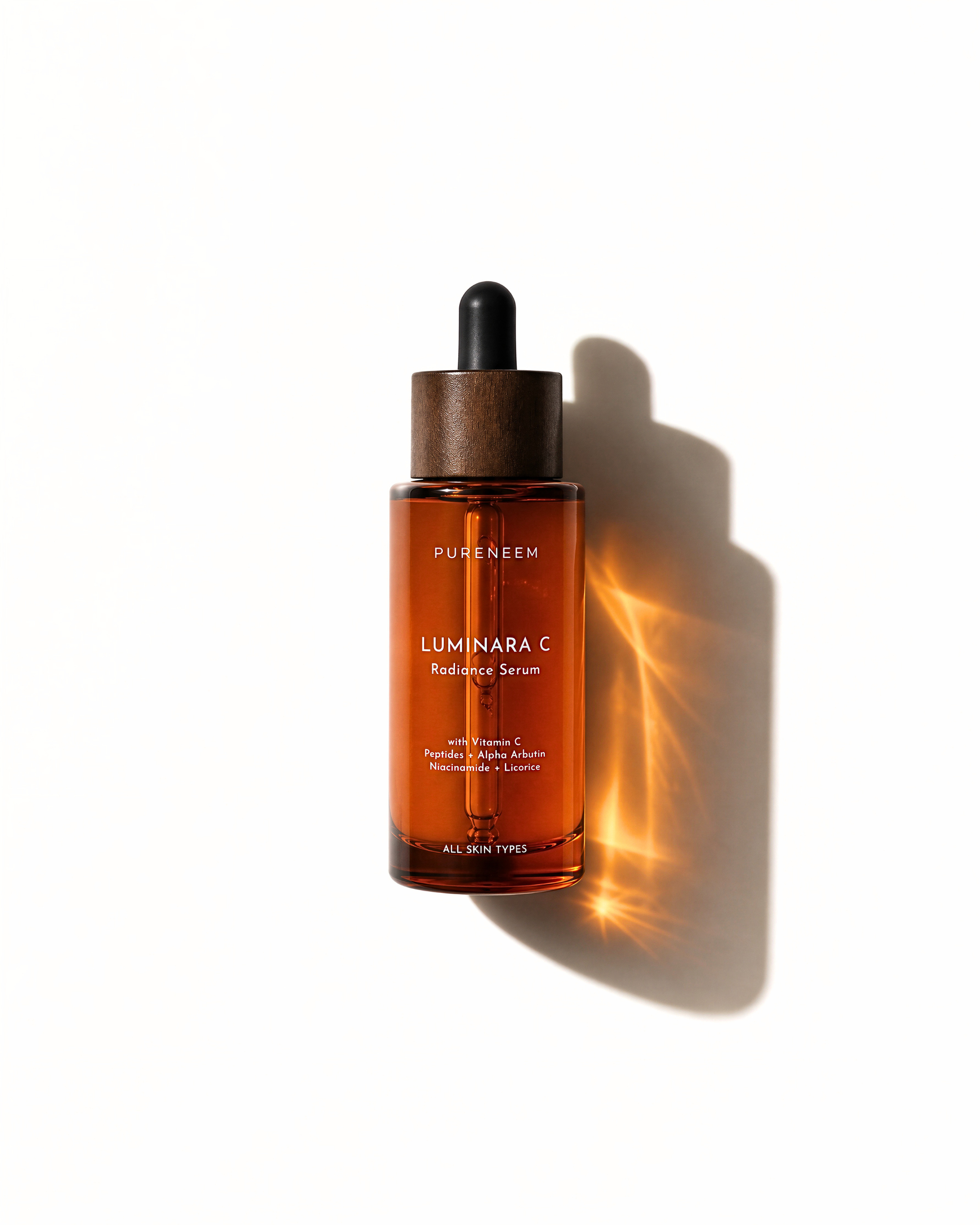
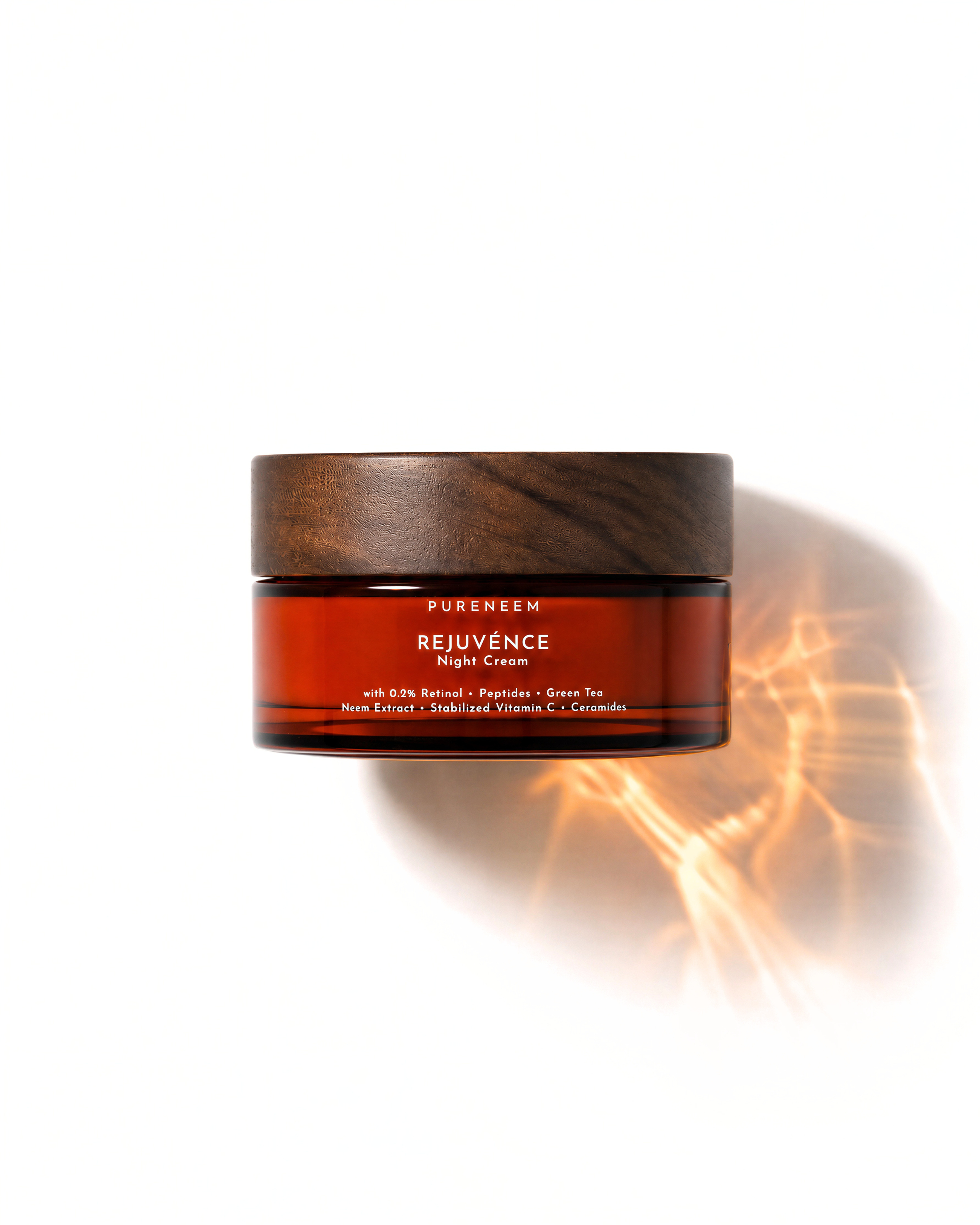
Neem is also in Rejuvence Night Cream, working quietly behind the retinol and ceramides, and in Luminara C Radiance Serum, where it sits under the tone actives. These two are where it leads rather than supports.
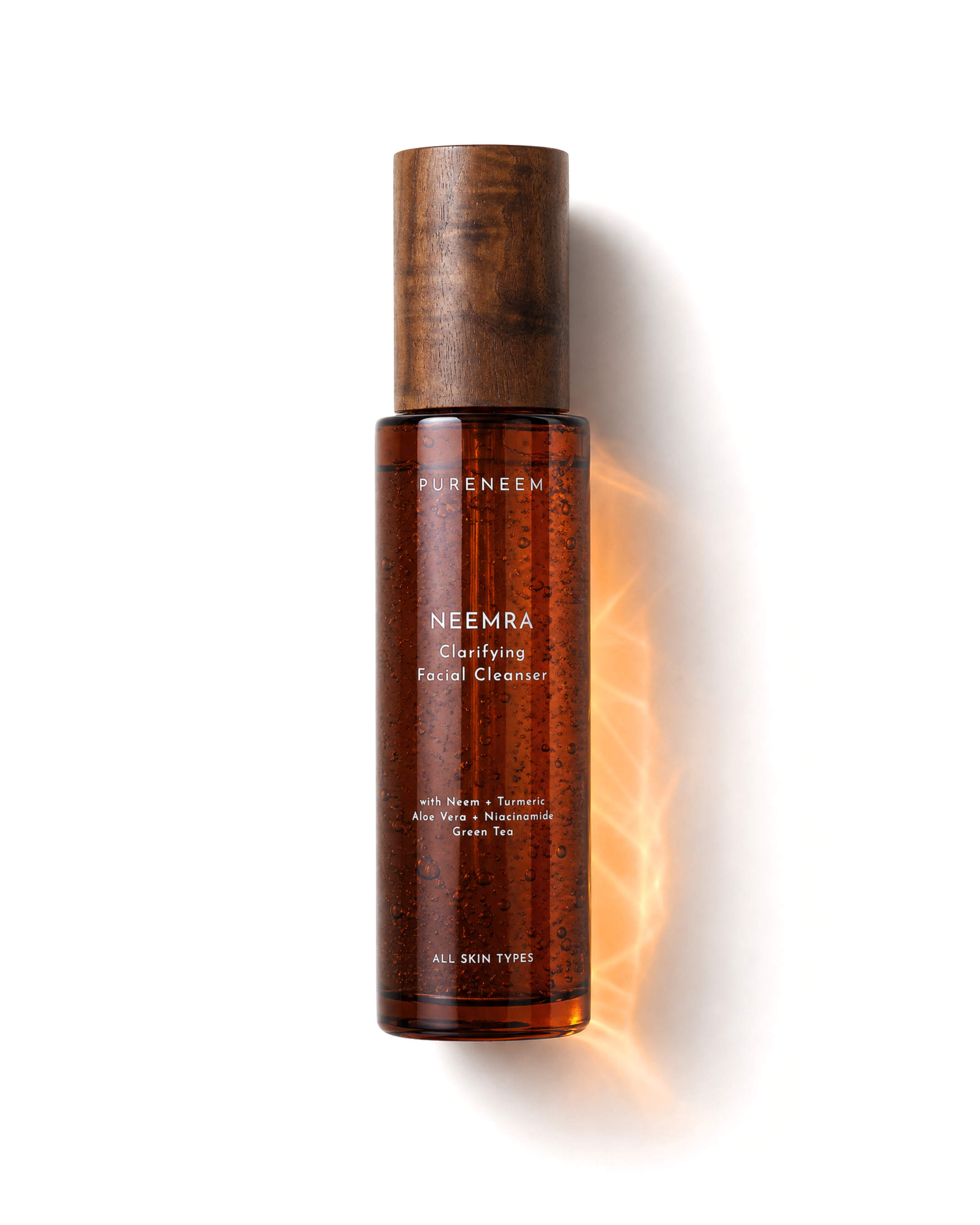
The most neem forward thing we make, and the product the brand starts from. Neem gives the wash its clarifying character, aloe and glycerin keep it civil, and skin is left looking clean and feeling calm rather than tight.
Body care that is treated with the same seriousness as a facial formula. Neem sits alongside charcoal and mineral mud here, giving a robust polish a botanical spine, with shea and coconut making sure skin finishes soft rather than scoured.
A practical note on pairing neem with retinol
Rejuvence Night Cream carries both, which is a combination people ask about. It works because the formula is built for it. Ceramides and peptides support the barrier while the retinol does the assertive work, and the neem sits underneath as a botanical constant rather than a second active competing for room.
If you are starting retinol from nothing, our retinol guide covers the four week ramp, and why most people who give up do so in the first fortnight for reasons that have nothing to do with the retinol itself.
Common questions
Neem, answered plainly.
What does neem do for your skin?
In a cosmetic formula neem is used to support a clarified, less congested looking surface with a calm finish. It is a traditional botanical with a very long record of ordinary use, and in our products it does a cosmetic job rather than a medical one.
Is neem good for oily skin?
It suits oily and combination skin well, which is why it leads in a cleanser rather than a cream. Skin that is already dry will do better meeting neem in a wash that is rinsed off than in something left on all day.
Does neem dry your skin out?
That depends entirely on what it is sitting next to. Neem on its own reads austere. In a formula built with humectants and soothing botanicals alongside it, skin should feel comfortable straight after rinsing rather than tight.
Can you use neem every day?
Yes, at the levels used in a finished cosmetic formula. A neem cleanser is a daily product. A neem containing body polish is not, simply because exfoliation is the limiting factor there rather than the botanical.
Does neem skincare smell like neem?
Ours does not. Raw neem leaf has a famously sharp green smell, and a standardised deodorised extract keeps the botanical and leaves that behind. If you have used a traditional neem preparation before, this will not smell like it.
References
- Biswas, K., Chattopadhyay, I., Banerjee, R. K., and Bandyopadhyay, U. (2002). Biological activities and medicinal properties of neem (Azadirachta indica). Current Science, 82(11), 1336 to 1345.
- Braga, T. M., Rocha, L., Chung, T. Y., Oliveira, R. F., Pinho, C., Oliveira, A. I., Morgado, J., and Cruz, A. (2021). Azadirachta indica A. Juss in vivo toxicity, an updated review. Molecules, 26(2), 252.
- Ghimeray, A. K., Jin, C. W., Ghimire, B. K., and Cho, D. H. (2009). Antioxidant activity and quantitative estimation of azadirachtin and nimbin in Azadirachta indica A. Juss grown in foothills of Nepal. African Journal of Biotechnology, 8(13), 3084 to 3091.
- Kumar, V. S., and Navaratnam, V. (2013). Neem (Azadirachta indica): Prehistory to contemporary medicinal uses to humankind. Asian Pacific Journal of Tropical Biomedicine, 3(7), 505 to 514.
Purify with Neem