
The Ingredient Files
Licorice root, the quiet way to work on tone.
Most tone ingredients announce themselves. Licorice root does not. It is one of the gentlest botanicals in the brightening conversation, which is exactly why it ends up in formulas designed to be used every day rather than survived.
300
Compounds identified in Glycyrrhiza glabra, of which glabridin is the most studied for skin
4000
Years licorice root appears in the written record of traditional medicine systems
4
PureNeem formulas that carry licorice root extract
A root with a long paper trail.
Licorice root extract comes from Glycyrrhiza glabra, a legume grown across the Mediterranean and western Asia. The root has been chewed, brewed and ground for thousands of years, which means it arrived in modern cosmetic chemistry with an unusually long record of ordinary human use behind it.
Chemically it is a crowded ingredient. Roughly three hundred compounds have been catalogued in the plant, and three of them do most of the work formulators are interested in. Glabridin is the flavonoid that draws the most attention. Liquiritin and licochalcone A are the other two names you will see on an ingredient deck.
What reaches your skin is not the raw root. It is a standardised extract, usually water or glycol based, dosed low and blended into a system that carries it. The extract is pale, faintly sweet and almost odourless, which is one reason it disappears so easily into a serum.

Read the studies, not the marketing.
Published work has examined how glabridin interacts with tyrosinase, the enzyme involved in melanin formation, in laboratory models (Fu et al., 2005). Separate work has looked at glabridin and tyrosinase activity in cell culture (Saeki et al., 2013). Licochalcone A has its own literature, largely concerned with antioxidant behaviour and the look of redness (Elsner and Maibach, 2005).
That is a precise body of evidence and it deserves precise language. Laboratory findings about an enzyme are not the same thing as a promise about your face. What licorice root extract earns, in a well built formula and used consistently, is a contribution to the look of a brighter, more even tone.
It is worth saying that this happens slowly. Tone work is measured across months. Anything sold on a faster timeline is selling the packaging.

It gets along with everything.
Licorice root is unusually easy to build around. It is well tolerated across skin types, it carries no fragrance of its own, and it does not destabilise the actives it sits beside. That combination is rarer than it sounds.
It also covers a gap. Stronger tone ingredients tend to come with a tolerance cost, so formulas that lean on them alone are often too much for daily use. Licorice root lets a formula work on the look of evenness without raising the irritation ceiling, which is why it appears alongside niacinamide, vitamin C derivatives and green tea so often.
In Ayurvedic formulating it sits comfortably next to turmeric root as well. Both are botanicals with a long domestic history and a modern extract behind them, and both behave better in a supporting role than as the whole argument.

Even tone is built slowly, or it is not built at all.
Four ingredients, four temperaments.
Tone is the part of skincare where people buy the most and understand the least. This is the shortest honest summary of who does what.
| Ingredient | How it behaves | Tolerance |
|---|---|---|
| Licorice root | Gentle, cumulative, supports the look of a more even tone | High, suits daily use |
| Vitamin C | Antioxidant first, radiance second, format dependent | Varies sharply by derivative |
| Niacinamide | Barrier support and the look of refined texture | High at sensible percentages |
| Alpha arbutin | Targeted work on the look of uneven patches | Good, but slower than people expect |
The useful conclusion is that none of these is a replacement for another. They are layers of the same job. A serum that carries three of them at sensible levels will out perform a serum carrying one of them at a dramatic level, because the limiting factor is almost never potency. It is whether you can stand to use the thing every morning. If you want the longer argument on vitamin C formats specifically, we wrote one on ethyl ascorbic acid versus L ascorbic acid.
Four products, one consistent reason.
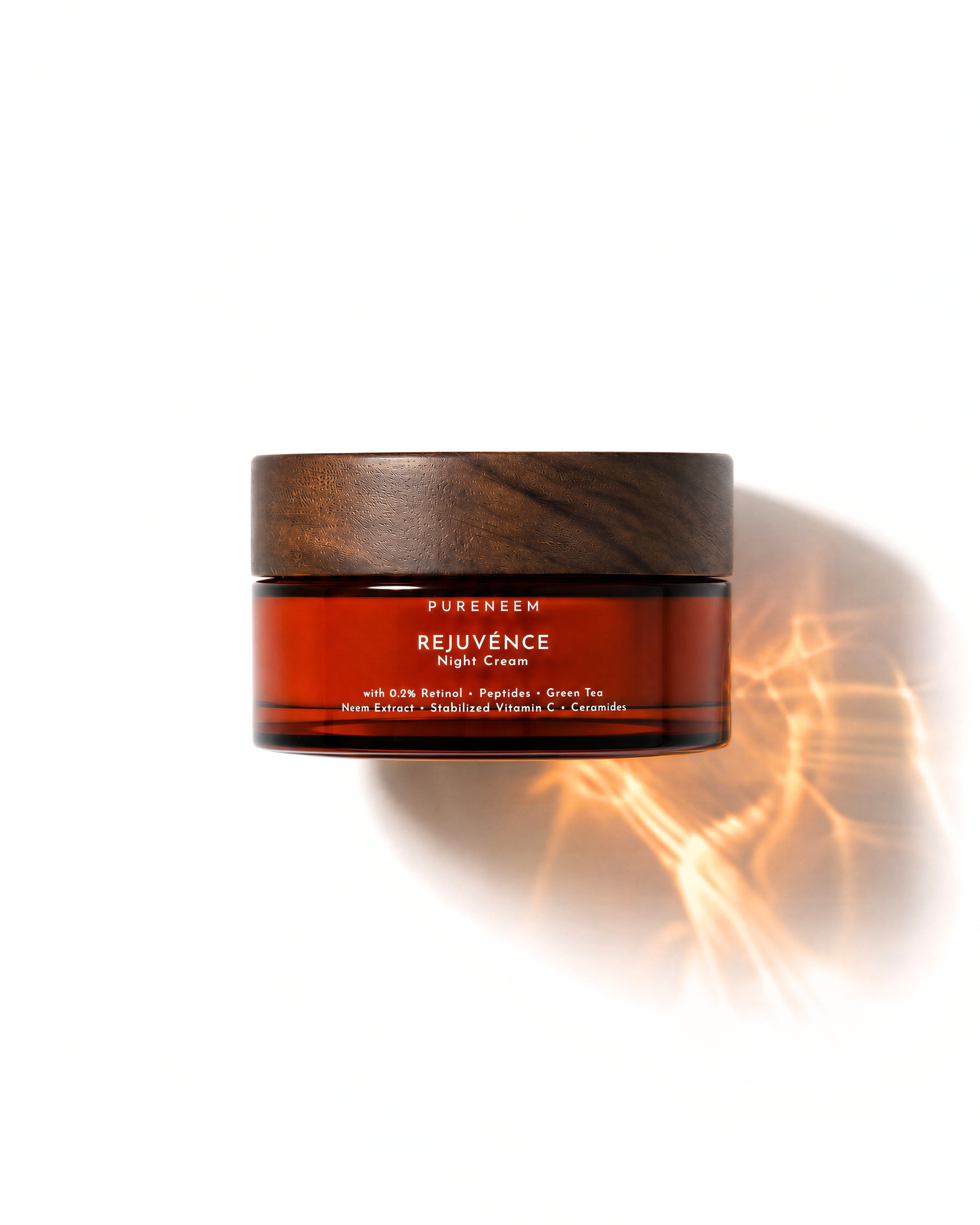
Licorice root extract is in four of our seven formulas. It is also in Rejuvence Night Cream, where it sits alongside retinol, and in the Coco and Char Purifying Exfoliant, where it softens the character of a deliberately robust body polish. These two are where it does the most visible work.
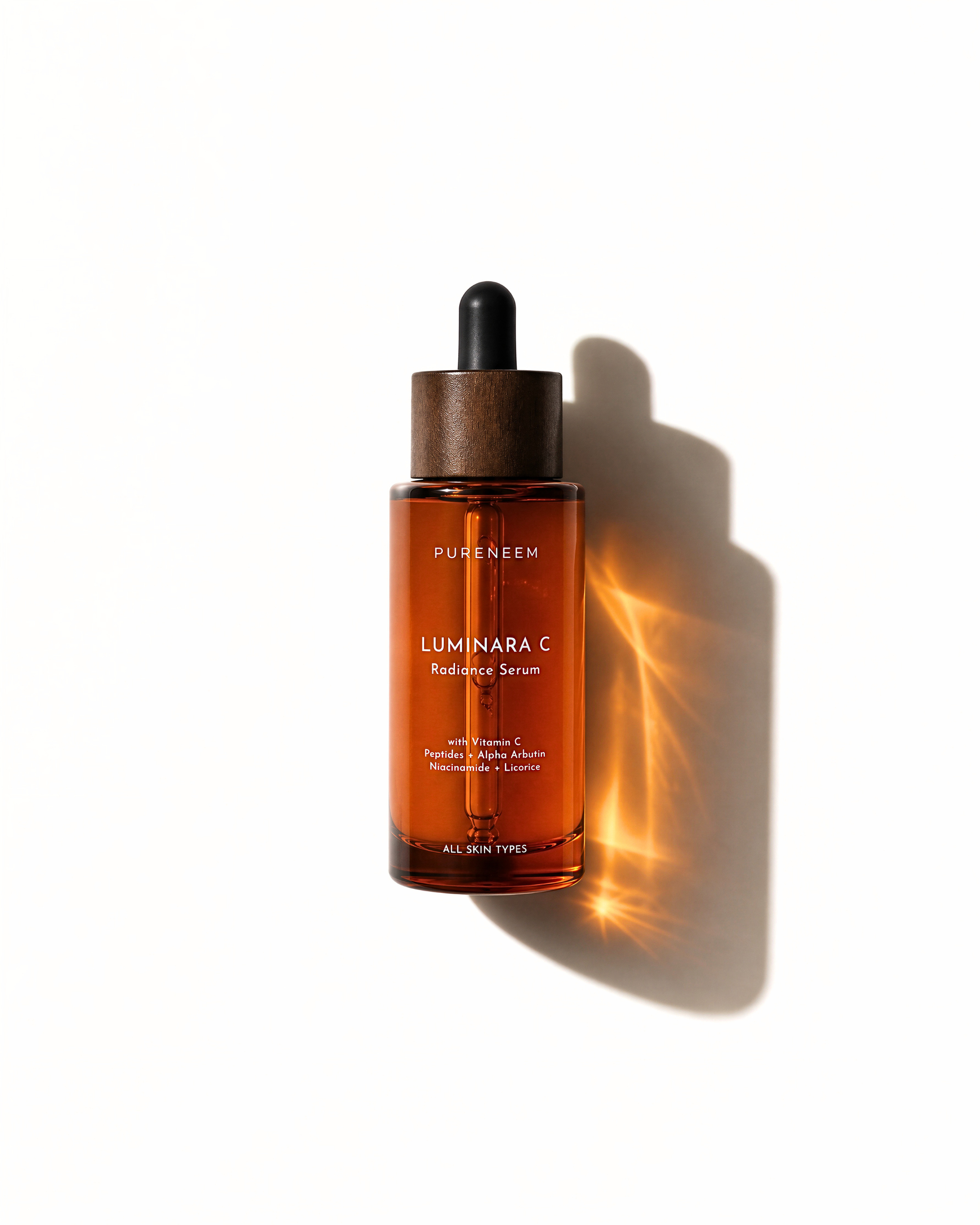
This is the formula built around tone, so licorice root is not a garnish here. It works with the vitamin C derivative and alpha arbutin as one system aimed at the look of a brighter, more even complexion, with a finish light enough to sit under everything else.
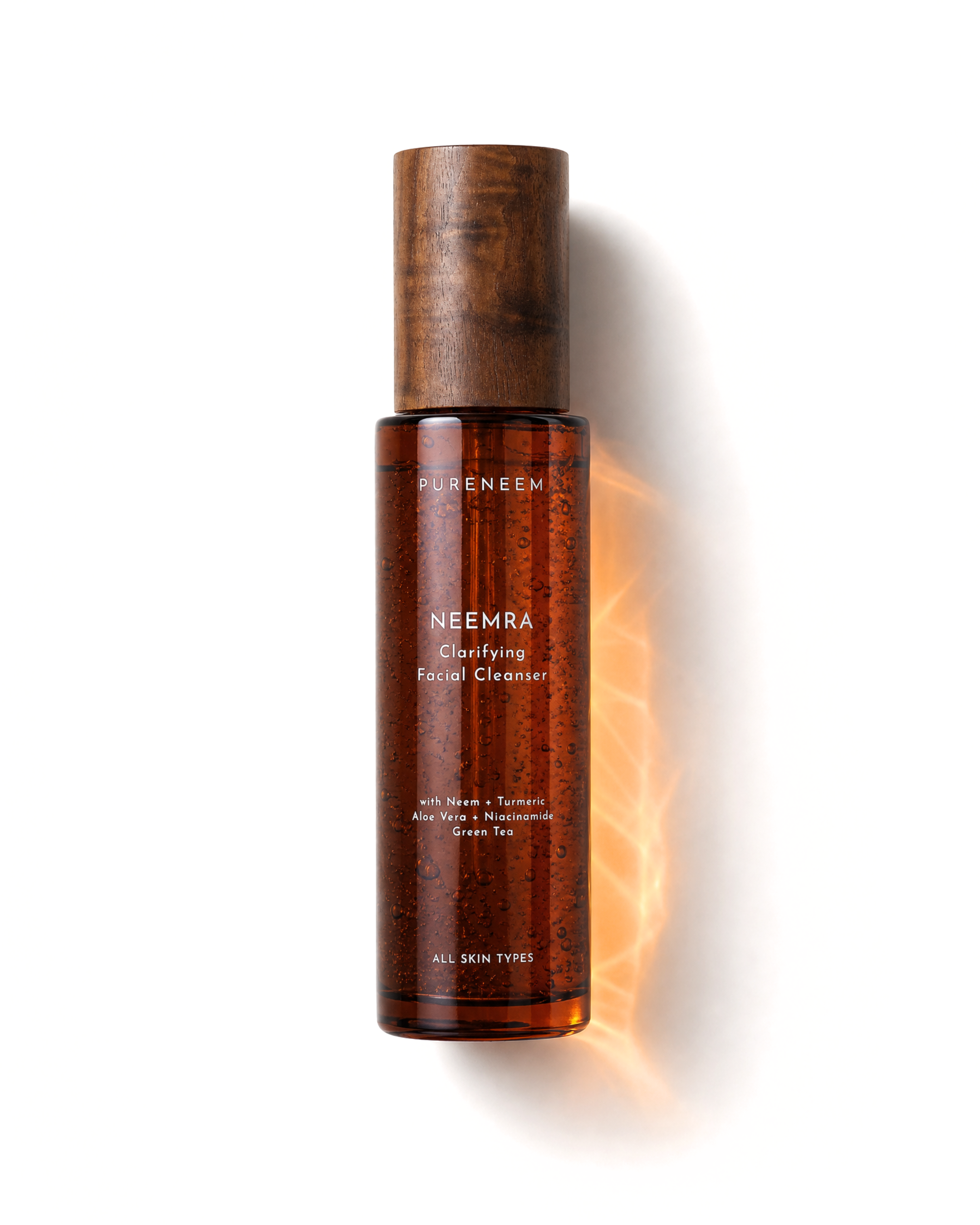
In a cleanser the job is different. Licorice root is there for comfort, keeping a clarifying wash from reading as stripping, so skin feels calm rather than squeaky once it is dry.
A practical note on radiance
Licorice root is almost never the whole answer on its own. It is a supporting ingredient by temperament, and the results people describe usually come from a formula where it sits alongside a well chosen vitamin C.
If you are deciding where to start, our vitamin C guide covers which derivative suits which skin, and why the percentage on the front of the bottle is the least interesting number on it.
Common questions
Licorice root, answered plainly.
What does licorice root do for skin?
In cosmetic formulas it is used to support the look of a brighter, more even tone, and to keep a formula comfortable while other ingredients do more assertive work. It is a supporting player with a long record rather than a dramatic active.
Is licorice root good for sensitive skin?
It is one of the better tolerated botanicals in the tone category, which is part of why it appears in formulas designed for daily use. As with anything new, introduce it on its own for a few days before layering it into a fuller routine.
How long does licorice root take to work?
Tone changes slowly. Most published work in this area runs over weeks to months, and that is the honest expectation to set. Comfort and finish shift much sooner, often within the first fortnight.
Can you use licorice root with vitamin C?
Yes, and it is one of the more sensible pairings available. They approach the look of an even tone from different directions and they do not compete for the same room in a formula, which is why you will often find them in the same serum.
Is licorice root the same as the sweet?
Same plant, different purpose. Confectionery uses the sweet glycyrrhizin fraction of the root. Skincare uses a standardised extract selected for its flavonoid content, at a fraction of a percent, and it does not smell of anything much at all.
References
- Draelos, Z. D. (2000). Skin lightening preparations and the hydroquinone controversy. Dermatologic Therapy, 13(3), 231 to 237.
- Elsner, P., and Maibach, H. I. (2005). Cosmeceuticals and Active Cosmetics: Drugs versus Cosmetics. CRC Press.
- Fu, B., Li, H., Wang, X., Lee, F. S., and Cui, S. (2005). Isolation and identification of flavonoid glycosides from licorice and a study of their structure activity relationship. Journal of Agricultural and Food Chemistry, 53(19), 7408 to 7413.
- Saeki, Y., Yamamoto, Y., Kawai, M., and Yamada, Y. (2013). Glabridin suppresses melanogenesis by inhibiting tyrosinase activity. Pigment Cell and Melanoma Research, 26(5), 646 to 648.
Brighten & Soothe with Licorice