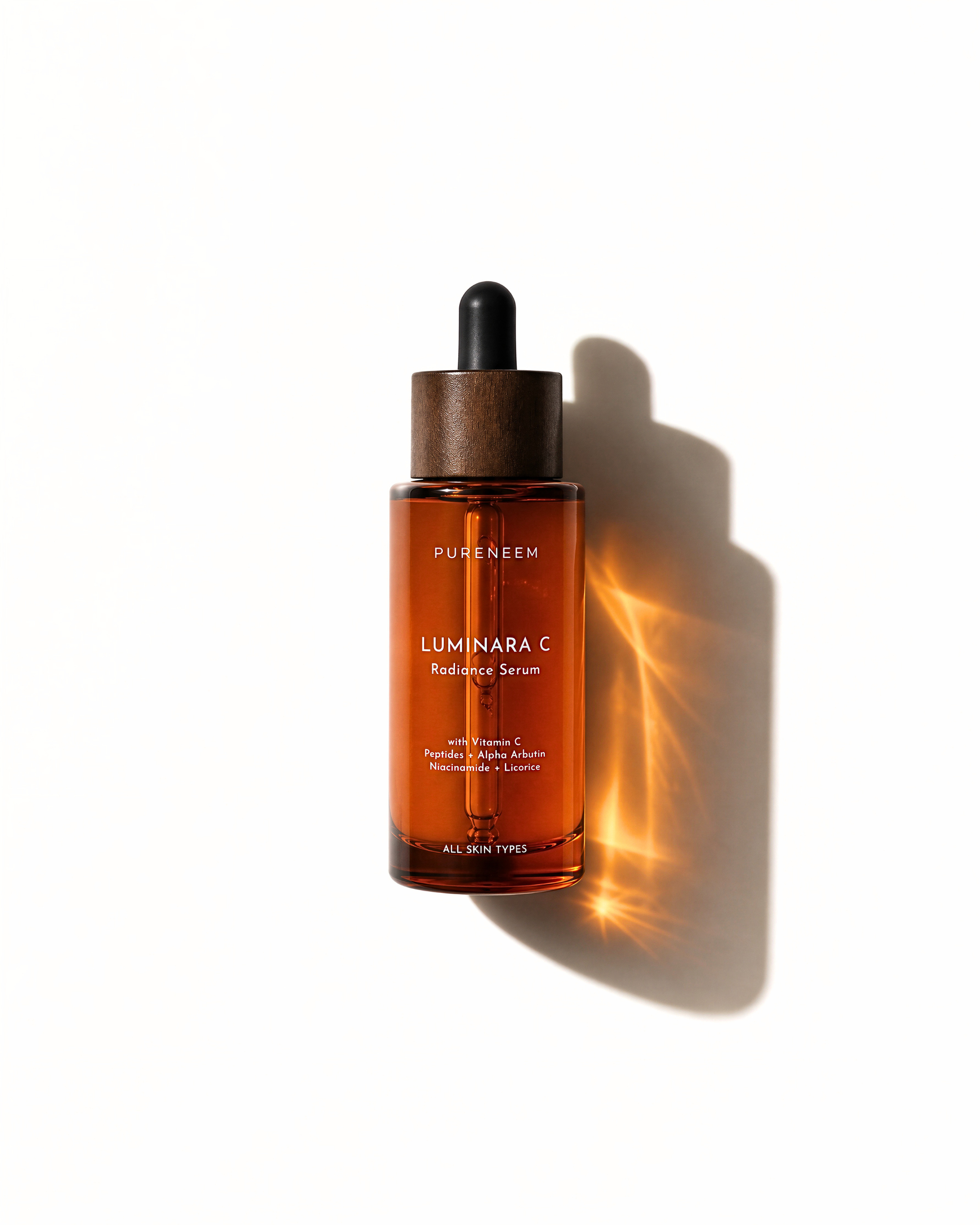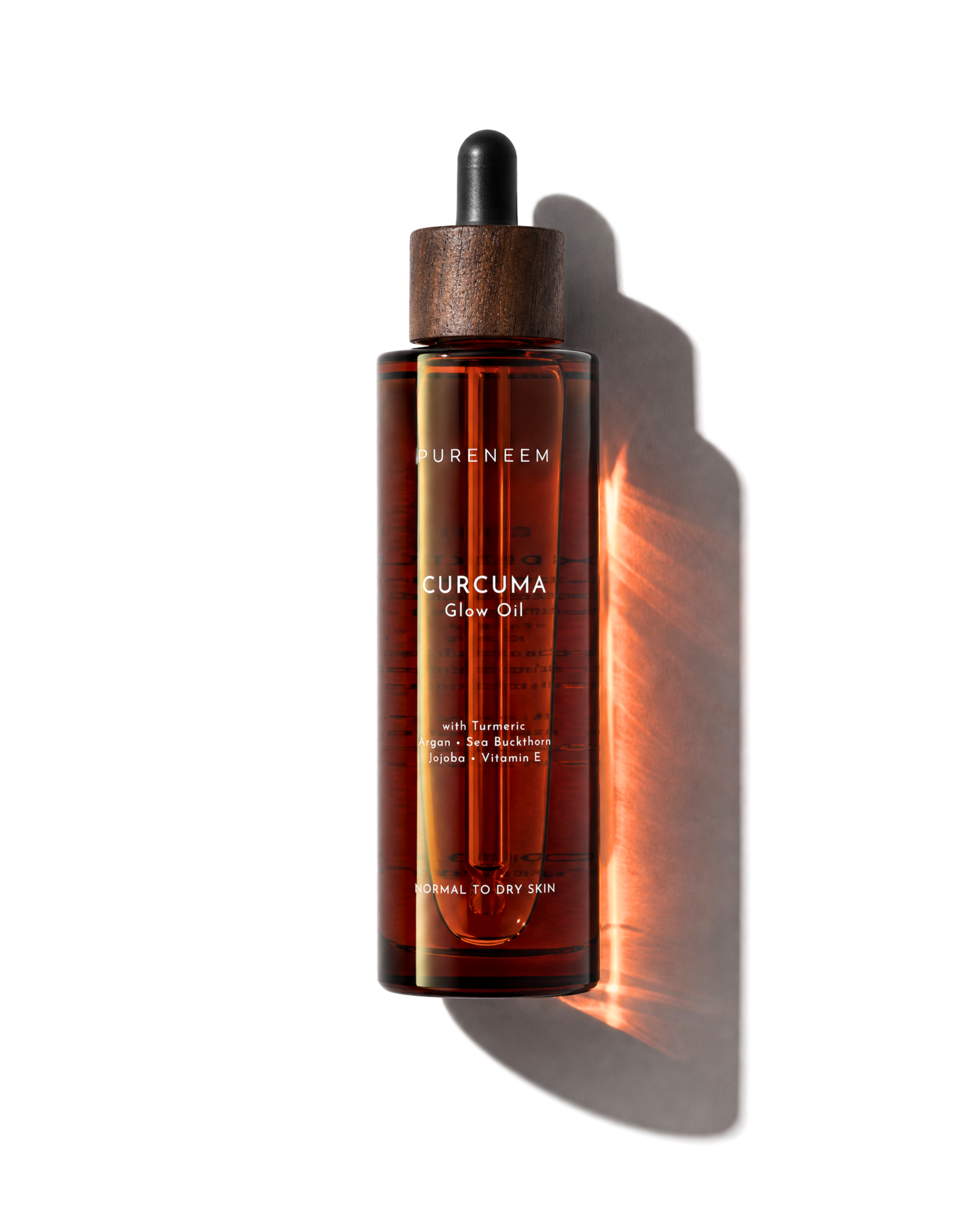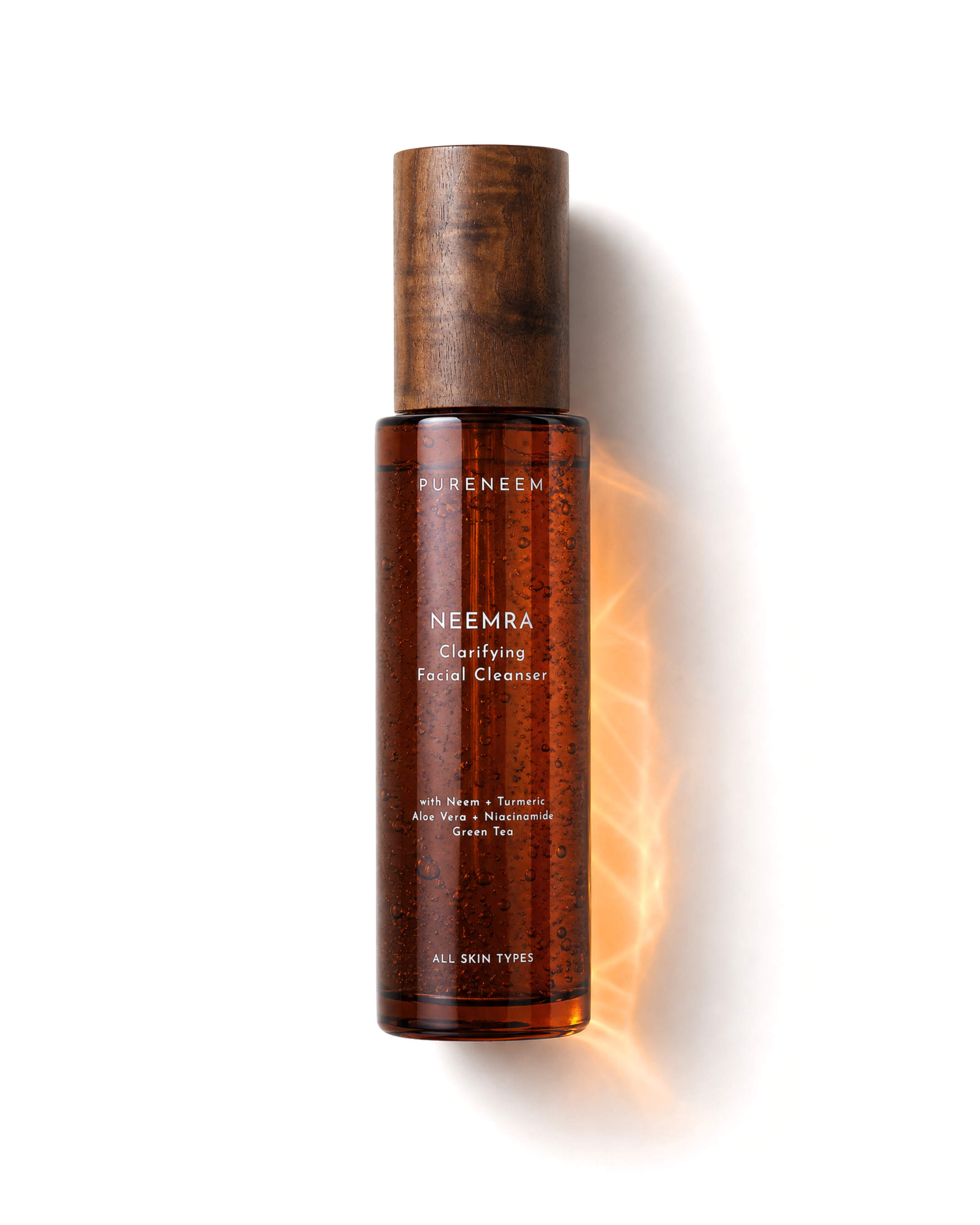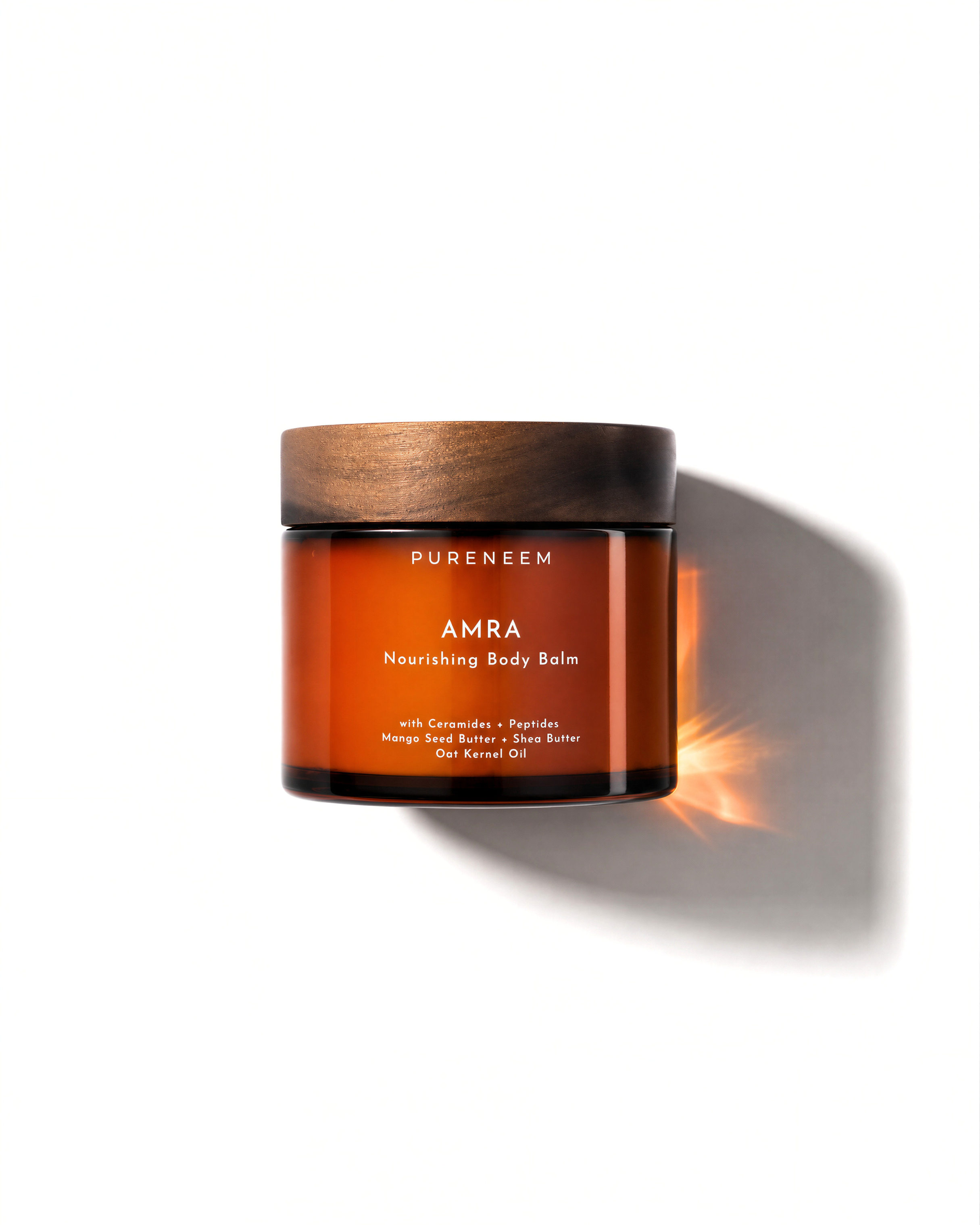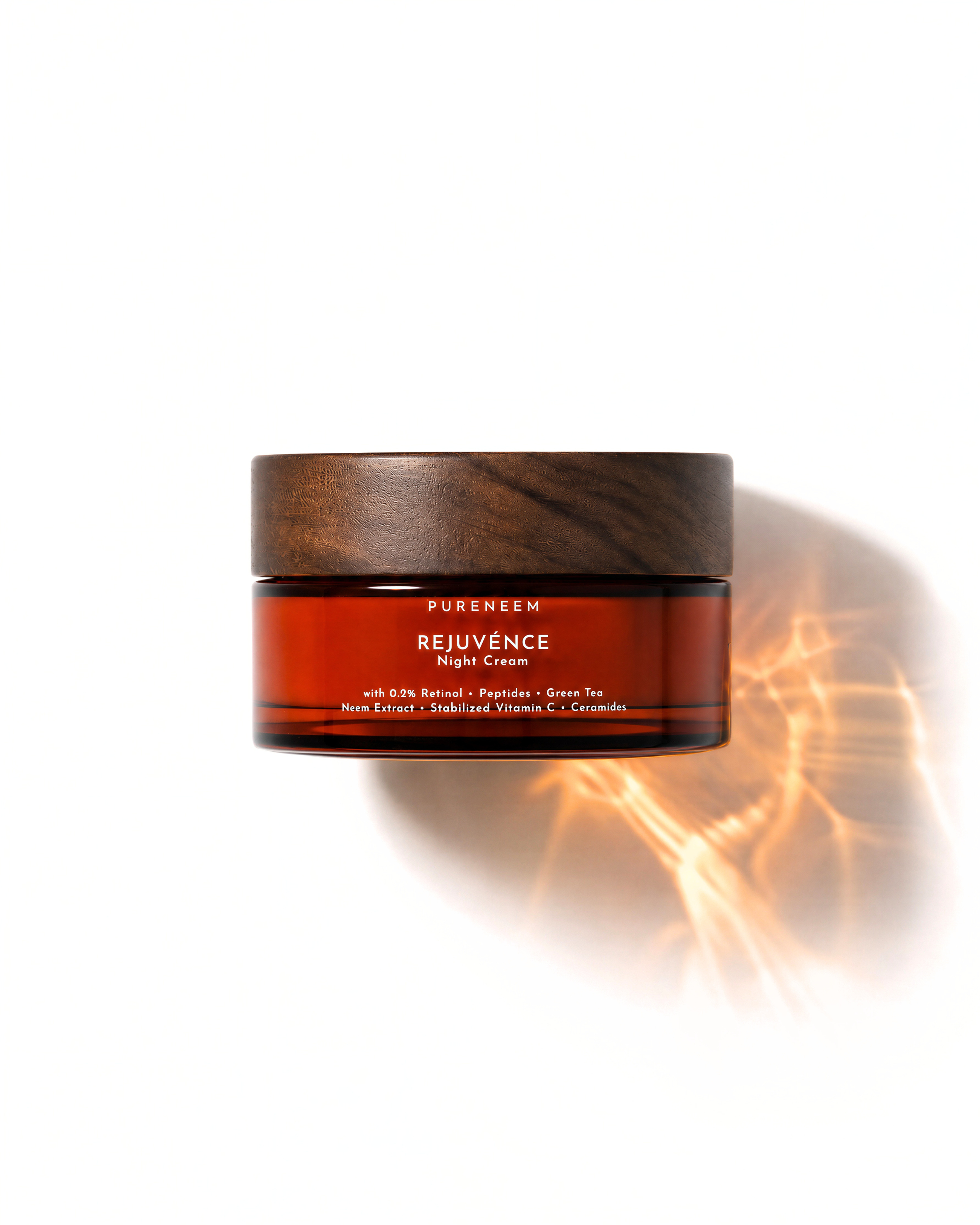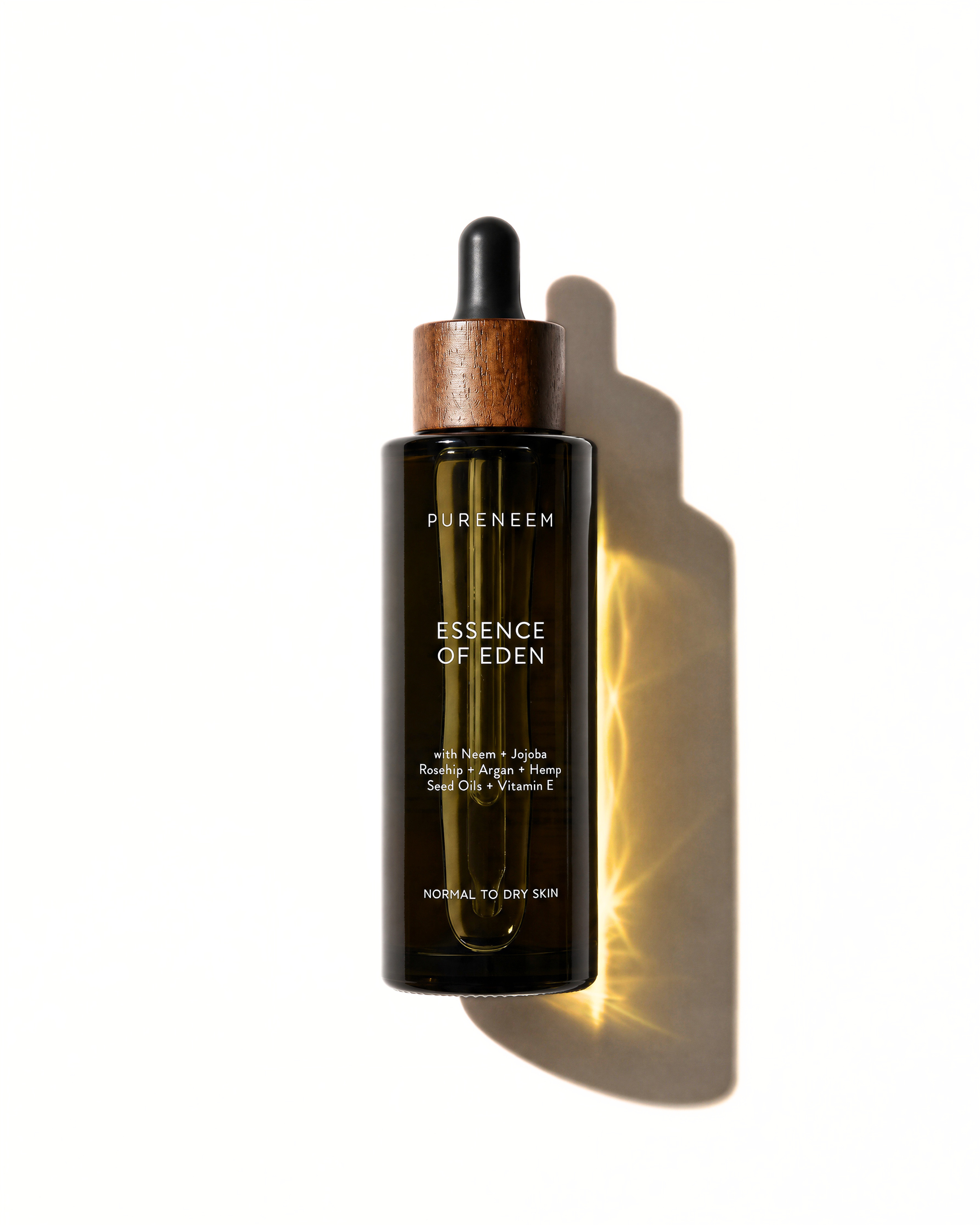



The Position
Fewer products, and why that is our actual position.
Skinimalism gets written up as an aesthetic. It is not. It is a formulation argument, and it is the one this brand is built on. Seven products in the whole range, four steps in a routine, and a reason for every one of them.
7
Products in the entire PureNeem range, which is deliberate
4
Steps in the routine we would actually recommend, morning and night combined
3
Jobs a moisturiser has to do. One good formula covers all three
More products is not more skincare.
A twelve step routine is not twelve times as effective as a four step one. Past a certain point, each additional product mostly does three things. It dilutes what you spent on the good ones. It makes the routine long enough that you skip it on the nights it matters. And it makes any reaction impossible to attribute.
That last one is the expensive part. If eleven things are running and skin looks unsettled on a Thursday, there is no way to work out which of the eleven caused it. People then add a twelfth to fix it. This is how a bathroom shelf becomes an archaeology site.
The alternative is not austerity. It is choosing well and then leaving it alone long enough to see what happens, which for most actives is a full season rather than a fortnight.

Fewer steps means every formula has to carry more.
A minimal routine only works if the products in it are doing several jobs at once, which is harder and more expensive to formulate than a single ingredient serum.
Take a moisturiser. It has to hold water at the surface, smooth the gaps between surface cells and slow how fast that water leaves. Three jobs. A cheap cream does one of them and lets you buy two more products to cover the others. A well built one does all three and finishes silky rather than either tacky or greasy, which is a formulation problem rather than a price problem.
The same logic runs through the range. A night cream that carries retinol, ceramides and peptides in one step replaces three products. That is the whole design brief, and it is why we have seven products rather than twenty four.

Ayurveda got here first, and for the same reason.
Traditional South Asian skin practice was never a fourteen step regimen. It was a handful of preparations, used consistently, adjusted by season. Oil, a cleansing paste, a butter. That is three things.
The framing was that skin changes with the weather, the workload and the year, and that a routine should be steady enough to notice those changes against. You cannot read a signal off a system with eleven variables in it. We set that out at length in our piece on how skin shifts across the seasons.
What modern formulation adds is precision about what is in each of those few preparations. Neem and turmeric were there for a reason. So are niacinamide and peptides. The number of steps is the part we did not need to change.

Minimal but potent. Not minimal instead of potent.
What to keep, and what is decoration.
Go and look at the shelf. Everything on it falls into one of these rows.
| Step | Verdict | Why |
|---|---|---|
| Cleanser | Keep one | One that finishes comfortable. A second cleanser is almost always a sign the first is wrong |
| Moisturiser | Keep one | If it covers all three hydration jobs, it is the only one you need |
| Sunscreen | Keep, non negotiable | The highest return item in the entire category, by a distance |
| One active | Keep one at a time | Retinol or vitamin C. Running both plus acids is how routines fall over |
| Toner | Usually drop | A hydrating one is fine. A stripping one is undoing your cleanser choice |
| Essence, ampoule, second serum | Usually drop | Check the ingredient list against what you already own. It is often the same list |
| Weekly exfoliant | Keep one, twice weekly | More than twice a week is where the trouble starts |
Four steps daily plus sunscreen plus one exfoliating step twice a week. That is the routine, and it fits on a shelf rather than in a cabinet. If you want the evening half written out with timings, we set it out in our evening ritual.
Two products doing four products' work.
These are the clearest examples of the argument above, which is why they are the two most people start with.
Snow mushroom and snail mucin hold water, centella and hydrolyzed collagen smooth the surface, shea and beeswax close it. Three jobs, one jar, and a finish that layers cleanly under makeup or sunscreen.
Retinol with ceramides, peptides and shea in the same formula. The reason the evening is one step rather than three is that the supporting ingredients are already in the jar with the active.
A practical note on your one moisturiser
In a short routine the moisturiser is the hardest working thing you own, so it is the decision worth spending time on. The question is not which hydrating ingredient holds the most water. It is which formula covers all three jobs and finishes the way you want it to.
Our guide to the best snail mucin skincare in Australia compares the hydrating formulas on finish, texture and price, which is the comparison that actually helps when you are only buying one.
Common questions
Skinimalism, answered plainly.
What is skinimalism?
A short routine built from a few products that each do several jobs, rather than a long one built from many products that each do one. The point is not fewer for its own sake. It is that a short routine gets done consistently and can actually be read.
How many skincare products do you actually need?
Four, plus sunscreen. A cleanser, a moisturiser, one active and sun protection. An exfoliating step twice a week if texture is a concern. Everything beyond that is preference rather than requirement.
Is a minimal routine enough for ageing skin?
Yes, provided the products are good. One well formulated night cream carrying retinol, ceramides and peptides does more than five thin single ingredient products layered on top of each other.
How do you cut down a long routine without upsetting your skin?
Remove one product a week rather than everything at once, starting with anything you cannot explain the purpose of. Keep the cleanser, the moisturiser and the sunscreen throughout. Give it a fortnight before deciding.
Does a short routine mean cheap products?
The opposite, usually. Multitasking formulas cost more to make because they carry more in one base. What changes is the total, since four good products generally cost less than eleven adequate ones.
References
- Draelos, Z. D. (2018). The science behind skin care: moisturizers. Journal of Cosmetic Dermatology, 17(2), 138 to 144.
- Rawlings, A. V., and Harding, C. R. (2004). Moisturization and skin barrier function. Dermatologic Therapy, 17(s1), 43 to 48.
- Mukherjee, S., Date, A., Patravale, V., Korting, H. C., Roeder, A., and Weindl, G. (2006). Retinoids in the treatment of skin aging. Clinical Interventions in Aging, 1(4), 327 to 348.
- Ananthapadmanabhan, K. P., Moore, D. J., Subramanyan, K., Misra, M., and Meyer, F. (2004). Cleansing without compromise: the impact of cleansers on the skin barrier and the technology of mild cleansing. Dermatologic Therapy, 17(s1), 16 to 25.
- Datta, H. S., and Paramesh, R. (2010). Trends in aging and skin care: Ayurvedic concepts. Journal of Ayurveda and Integrative Medicine, 1(2), 110 to 113.
Skincare Product Range